Showing posts with label outdoors ethics. Show all posts

Wednesday, February 23, 2022

2022-008 | DISPOSING PROPERLY EMPTY CANS

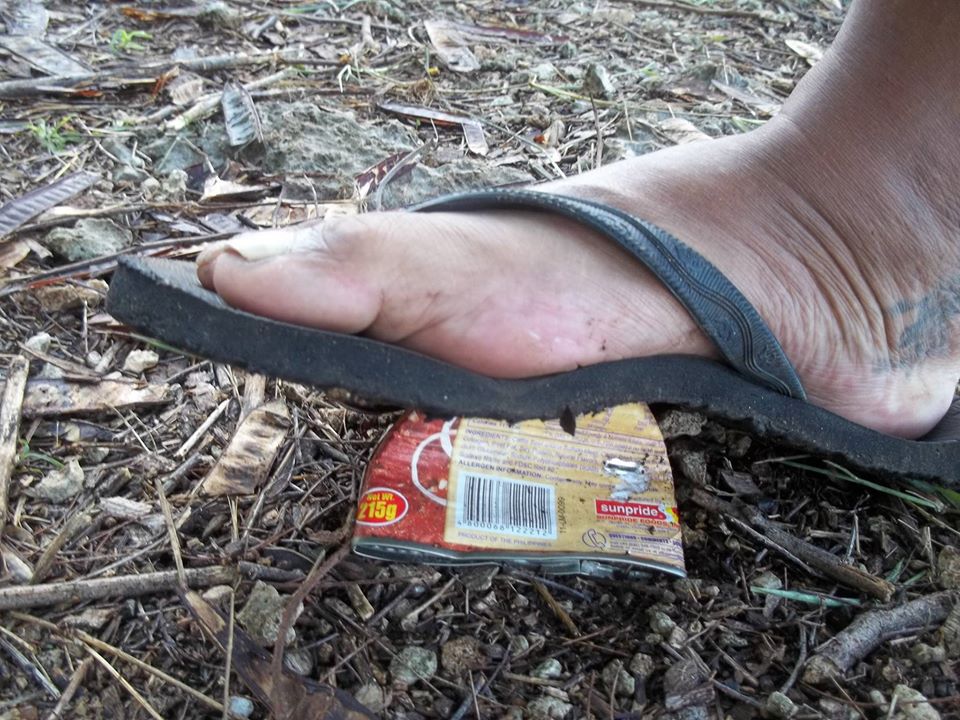
OUTDOORS COMMON SENSE TIPS: This is the proper way to dispose of empty cans: 

1. After emptying, turn it upside down the whole day or night so juices and fluids go down directly to the ground and gets cleaned off by ants.

2. When it is dried and cleaned, push the opened lid back inside with the thumb. That lid is jagged and sharp and slices through your thin garbage bags, no matter how many layers of plastic you use.

3. Step on the opened end with your foot. There is no resistance and it gets flattened easily.

4. Step on the unopened end and push it towards the middle. There is a slight resistance but shifting your weight forward gets it flattened nevertheless.

First seen in Facebook

October 27, 2018

=> => => o0o <= <= <=


I JUST HOPE THIS WILL find itself in school curriculums and outdoor-ethics seminars. This is a product of judicious observations and experiences that I have compiled through my many years of ranging our mountains and in wilderness areas and devising ways to remove harm and to help in listening the noise created by real and pseudo environmentalists against real and pseudo “mountaineers”.

When I joined a formal outdoors club in the early ‘90s, my outdoors awareness and values were shaped by what I witnessed. Most often, people would never carry their garbage bags inside their backpacks. Why should they? It stems from the fact that all the camp wastes are there and what if the flimsy bag burst open inside? What misfortune? 

Because of hygiene, they would rather piggyback the garbage bags outside of their backpacks or carry it with either hands. Razor-sharp blades of grass turn these thin garbage bags to smithereens that disemboweled the contents down the trail without the person’s knowledge. Or is it really grass blades that turned it inside out? Possibly but not all.

Opened cans, which still has leftover juices and feasted on by large flies, are deposited inside these flimsy black garbage bags, hoping its unpleasant appearance are forever buried away from your eyes. These same opened cans are half-heartedly flattened leaving the jagged lids as is and giving it the space to shred the plastic bag or flesh. 

Flattening properly increases storage space inside the garbage bag based on the instructions written in italics above. The properly flattened cans can now be placed safely in even the flimsiest garbage bag. You can even place that garbage bag inside your backpack. You just removed the hygiene issue with this method. 

Another plus is you just made space for more garbage to be taken in a garbage bin or a garbage collection truck with this kind of citizen’s initiative. What is more, you would be entitled to a prayer of thanks from a street scavenger who makes his living selling off junked cans to recycling depots and junkshops. You just made his life easy. 
=> => => o0o <= <= <=


WARRIOR PILGRIMAGE BLOG, personified by this writer, is synonymous with the Outdoors, since Bushcraft and Survival is its niche. Safety and Security are its bedrock when it ventured into organizing outdoor events that involved people as in adventure/pilgrimage guideships and seminars; and explorations and expeditions. 

Through tutorship, experience, folk knowledge and good old common sense, this writer was able to collect useful information which he is currently documenting in a book titled, ETHICAL BUSHCRAFT. He shares some of this information and knowledge in his training sessions; in his social-media account; and in this blog.


Tuesday, December 14, 2021

2021-048 | OUTDOORS SAFETY & CULTURAL SENSITIVITY

OUTDOORS COMMON SENSE TIPS: Respect our Local Communities.

First seen in Facebook

August 7, 2018 

=> => => o0o <= <= <=


I AM REPOSTING VERBATIM an article by ADRENALINE ROMANCE about cultural sensitivity, which the blog attribute to expedition and wilderness emergency services physician, Dr. Ted Esguerra, and adventure guru, Ramon “Jay Z” Jorge. Read and overcome your short attention span and learn from these experienced travelers.

THE DO’S 

1. Study the place, its culture, and political and economic setup where you will pass by or immerse.

2. Be courteous to anyone you meet along the trail.

3. Upon arrival, signify the intention of your visit to the chieftain, elder, tribal council, or barangay captain of the community.

4. Stay in one place where you can be seen by the majority of the community members or elders.

5. If you intend to hire porters/beasts of burden, deal only with the community coordinator.

6. Accept food offerings of the community with expressions of gratitude.

7. Ask permission to any community member when doing/asking something (e.g. ask to fetch water in a well).

8. Treat mountains, caves, rivers, etc. as sacred places. Most of the resident tribal communities consider these places as gods, havens of the gods, or holy grounds.

9. Join community gatherings, activities, and celebrations only if invited to do so.

10. If you are invited to teach, teach only what can be appreciated by the community.

11. Respond appropriately to friendly gestures.

12. Respect their beliefs and superstitions.

13. Observe silence. These folks enjoy the tranquility and peace of their environment.

THE DONT’S 

1. Don’t drink alcohol, take drugs, or make revelries in tribal areas. This is common sense, but you’ll be surprised as to how many visitors would do this.

2. Don’t expect luxuries. Accept and appreciate what they have.

3. Don’t ask for anything. The problem with social climbers/trekkers is that they ask for conveniences—their conveniences.

4. Don’t be boisterous, arrogant, vulgar, or rude. Be polite.

5. Don’t wear indecent or offensive clothes.

6. Don’t show off gadgets, cell phones, jewelry, or other items that are alien to the community.

7. Don’t do these things without asking permission first:

    ~ taking photos

    ~ approach women, children, and old people

    ~ visiting ritual sites and burial grounds

    ~ enter homes and properties

    ~ touch ornaments. They may be sacred items for the community.

8. Don’t correct or make fun of their beliefs. Each community has its own distinct and unique beliefs.

9. Don’t comment or show disapproval to some “grotesque” rituals such as breaking of chicken’s neck in a tribal dance.

10. Don’t kiss, hug, or do indecent acts in front of a community member.

11. Don’t laugh or giggle in front of the community. That’s because even if you didn’t mean anything, they might assume that you’re making fun of them.

12. Don’t leave trash behind, whether biodegradable or non-biodegradable.

13. Don’t pollute rivers, creeks, wells, and other water sources.

14. Don’t vandalize such as etching your name on artifacts or rock walls.

15. Don’t destroy traps set by community hunters. Don’t hunt!

PREVENTING CULTURAL CONTAMINATION

1. Pay the local only the amount that was agreed upon. Do not bribe or give tips. When you introduce the concept of bribing or tipping to a normally honest community, you change their idea about money. This later manifests to exorbitant rates and questionable fees, which we all complain about.

2. Don’t visit a remote community as a large group. Remember that these people are wary of single strangers, so you can imagine what they are thinking if they see a group of strangers.

3. When taking photos, be unobtrusive. Don’t ask people to pose for you. Keep a distance between you and the subject that you’re shooting.

4. Avoid teaching things or giving stuff that the community doesn’t need.

5. Avoid showing interest in buying items from the community. Never establish trade without the knowledge of the elders.

6. Don’t introduce another paradigm that is alien to the community such as playing loud disco music in a community that values their own music.

7. Never assure the community that your knowledge, medicine, food, equipment, tools, etc. are better than theirs.

8. Tribal communities are fond of communal eating. Don’t eat separately from a family or a group.


The most meaningful travel happens when you go down deep, listen to the stories, and immerse in the ways of life of these wonderful people. It’s incredibly inspiring to see how they value their environment and culture. 

However, you should remember that you are just a visitor. No matter how you think highly of yourself, you are the odd person out. As thus, you should leave as little trace as possible, whether it be on the environment or with the cultural practice of the people. 

=> => => o0o <= <= <=


WARRIOR PILGRIMAGE BLOG, personified by this writer, is synonymous with the Outdoors, since Bushcraft and Survival is its niche. Safety and Security are its bedrock when it ventured into organizing outdoor events that involved people as in adventure/pilgrimage guideships and seminars; and explorations and expeditions. 

Through tutorship, experience, folk knowledge and good old common sense, this writer was able to collect useful information which he is currently documenting in a book titled, ETHICAL BUSHCRAFT. He shares some of this information and knowledge in his training sessions; in his social-media account; and in this blog.


Screened shot photo and quotes, in italics, attributed to Adrenaline Romance, with permission.

Monday, November 15, 2021

2021-044 | BLENDING

OUTDOORS COMMON SENSE TIPS: Stealth camping is not about blending with surroundings. It is also about leaving everything as it was when you break camp. Leave your camp without a trace, not the Western LNT ideology, but the ones that were and are still practiced by indigenous people.

First seen in Facebook

July 21, 2018

=> => => o0o <= <= <=


CAMOUFLAGING IS AN ART. One of the best principle of blending in a natural surrounding is to make yourself unobservable as possible. Never stand out if you want to do stealth camping. Mingle with the terrain or vegetation intimately and unobtrusively. Light, color, shapes, shadows, movements, smell and sounds are the things which attract observation. But, then again, why would you have to do that? 

Let us consider the three scenarios: 

You hunt wildlife. You set up your hidden shelter and wait for wild game that appear in your scope. The shelter is a combination of dead or green branches and grass or leaves that you source from somewhere abundant. You set this up presumably to fool game but not humans, especially hikers or, what you feared most, forest wardens.  


By the way, hunting in the Philippines is now discouraged. There is a national law – Republic Act 9147 – which prohibits people from poaching, or hunting wildlife, especially endangered and/or vulnerable species and it carries a heavy penalty of imprisonment or fines or both at the discretion of the courts. 

Additionally, what were once okay to hunt before would now be covered by local ordinances or department orders, such as wild animals and birds, which numbers are not vulnerable. Moreover, it is extremely dangerous if you try this in ancestral domains belonging to indigenous tribal people, with any kind of methods. So, do not try! 

You copied from the Internet. You set up your stealth camp as prescribed in YouTube. You cut there and you cut here and you even outdo the Special Forces by adding vegetation as a camouflaging agent that you sourced from somewhere near. You tried to blend and you succeeded yet you leave a lot of traces but, who wants to know? 

Your life is in danger. You seemed to have noticed that a group of suspicious people had been following your trail from as far a mile away. You were able to leave a few traces to keep them guessing yet you know if you camp the way you camped, you would ultimately be caught. You decide to camp smartly by making use of dusk as your cover.


The first two scenarios used a lot of forest resources while the last one did not. The first two left a lot of traces and telltale ones that would lead people to know exactly, or guessed at, where you are and understood how your mind works. The last scenario has nothing to show and kept the pursuers off-track.

So stealth camping has nothing to do with altering the surroundings to suit to your location, although it is a given that you should in case of daylight and you are in a military mission. But, for purposes of leisure, there is nothing to hide from someone unless your activity is criminal in nature. Altering a campsite is not ethical so you could have your 15 minutes of YouTube fame.    

Most people are fully convinced that stealth camping is okay. That would have been alright if you used the same hole over and over again. The problem with that is you cut and leave and start another one on another place. Then you label it “bushcraft”, which gave a bad taste.

The first photo is a good example of stealth camping. A low-hanging branch is used as ridgeline without the need of cutting smaller branches to accommodate a sheet. The ground is sloping but the occupant took advantage of an exposed root to prevent himself from rolling over. It is on a location where one would think that no one would camp. The occupant did not alter nor leave anything. 

=> => => o0o <= <= <=


WARRIOR PILGRIMAGE BLOG, personified by this writer, is synonymous with the Outdoors, since Bushcraft and Survival is its niche. Safety and Security are its bedrock when it ventured into organizing outdoor events that involved people as in adventure/pilgrimage guideships and seminars; and explorations and expeditions. 

Through tutorship, experience, folk knowledge and good old common sense, this writer was able to collect useful information which he is currently documenting in a book titled, ETHICAL BUSHCRAFT. He shares some of this information and knowledge in his training sessions; in his social-media account; and in this blog.


Thursday, September 16, 2021

2021-036 | ABOUT HUMILITY BEFORE NATURE, PART 2

WISDOM TRAILS: Would you give enough time to smell the flowers? If you are outdoors, take advantage of it by making yourself connected with nature. Do not be greedy with your time and cultivate humility to understand that the landscape is not made for you.


First seen in Facebook

August 6, 2018

=> => => o0o <= <= <=


THE LANDSCAPE IS NOT made for you. You are just an intruder; an uninvited guest to the greatest show of Mother Nature. Therefore, the landscape would not entertain your idea of manipulating her to suit your personal agenda. However, the landscape would love you to be part of her and that is where you would really enjoy the big show. 

It is a reality show where you are the presentor, the narrator, the actor and the host. The stage is the outdoors and your freedom of movement and your flexibility to adapt is your script. However, much as we liked to bask in the klieg lights of our minds, arrogance and indifference to nature would shut your understanding of the world before you.

The best time to enjoy nature is to be by yourself. You can fool around with a rhinoceros beetle or a praying mantis or study the different sets of tracks before you once you are connected. The forest will unfold its secrets if you would just shed off your urban smugness and that annoying neon-toned attire.

The idea really is how would you blend with the landscape instead of standing out? Blending is an art. You do not have to be literal in understanding the term and be politically-correct by wearing those ever-present woodland camo suits that you see in YouTube all the time. Just be yourself and do not mind the time.

Nature appreciation is best walked in slow motion, with frequent stops; complete connection, by stooping low or to just kneel on the ground to observe the bustling life below the foliage; and total respect. You would be treading on an environment where you have no control of, yet, by blending, you would find harmony and beauty.

Your smartphone would be your companion in your new-found enthusiasm to the natural beauty and of the unfolding events around you. Document yourself and your discoveries and be like a child again. Humility is the key and that is the only way you can be with nature. For without humility, you can never absorb the essence of the landscape. 

Walk ever so gently so your presence would not startle wildlife, even fellow hikers you come across. Ditch that MP3 from your ears. The only soundtrack you need in this show is nature’s sound. Be aware of life all around you. Do not plug your ears with unnatural sounds else you would miss a lot of events.

Nurture a commitment unto yourself so you would not find yourself hurrying on a trail because you start late. Be on time whether you are with others or alone. If you prefer to start late be prepared to improvise your itinerary but never be in a hurry. Haste makes waste and causes grief to so many.     

=> => => o0o <= <= <=


WARRIOR PILGRIMAGE BLOG, personified by this writer, is synonymous with the Outdoors, since Bushcraft and Survival is its niche. Safety and Security are its bedrock when it ventured into organizing outdoor events that involved people as in adventure/pilgrimage guideships and seminars; and explorations and expeditions.

Through tutorship, experience, folk knowledge and good old common sense, this writer was able to collect useful information which he is currently documenting in a book titled, ETHICAL BUSHCRAFT. He shares some of this information and knowledge in his training sessions; in his social-media account; and in this blog.

Tuesday, June 8, 2021

2021-023 | GOOD FIRE ETHICS

OUTDOORS COMMON SENSE TIPS: Keep your fire small. Small enough so you could approach it safely and, at the same time, enjoy the warmth. Small enough to boil water and cook food. Small enough to contain it safely. 

Feed it with twigs instead of logs. Do not waste too much firewood for nothing. 

No need to have a big fire. No need to prove that you are a fine wood gatherer. A small fire serves a better purpose.


First seen in Facebook

March 8, 2018

=> => => o0o <= <= <=


I COULD NEVER UNDERSTAND why people make a bonfire in the tropics? For what purpose? You are no better than those illegal loggers that you despised so much. Those firewood you used for arousing your “primitive feelings” and your imagined rituals could have been used better by poor homesteaders for cooking. It is really a waste of good forest resources that amount to nothing!

Fire was man’s earliest companion until it was used in the later prehistoric years as a tool in early warfare. Likewise, it was used as a convenient shield in the commission of a crime. Lately, it became an instrument of choice by arsonists in falsifying insurance claims and, you scorn this one over the others, as a clearing agent to rid land of wild vegetation for farming. So, it carried a bad reputation. 

Fire, as we know now, has three elements. Yet just a few know that there is a fourth element. Fire can never be tamed nor will it recognize a human master. It is an ancient element where myths of its origins are concurred and born in tribal legends and children’s tales. Fire is neither good nor bad and humans have accepted its presence willingly in their hearths and loathed it when it goes berserk. 

I would rather have a fire that I can approach safely and extend a hand to reach over a pot that I place over it than have something that would totally keep me at bay. In bushcraft, we never play with fire. We respect so much this ancient human companion that we always place it in the middle of our campsites so we could enjoy its company. It becomes the center of a gathering.


From a campfire comes these human fondness of telling yarns and stories. It animates every individual around as it danced to the play of the breeze and makes the moment magical; totally connecting you to some humans of long ago who may have gathered around an ancient fire doing what you are doing. With a small fire, in hushed voices, words could float plainly in a tight circle. 

The presence of a fire, lit by wood, is always reassuring. Woodsmoke is so sweet that it arouses your primeval senses and keeps you alert. Settle with twigs and small branches and let it all burn out. Avoid large wood like logs. It keeps a hidden ember no matter how generous you douse it with water. Again, keep your fire small. It is practical, safe and manageable. Bonfires are for movies only. Do not imitate that unless you are sending a distress signal. 

=> => => o0o <= <= <=


WARRIOR PILGRIMAGE BLOG, personified by this writer, is synonymous with the Outdoors, since Bushcraft and Survival is its niche. Safety and Security are its bedrock when it ventured into organizing outdoor events that involved people as in adventure/pilgrimage guideships and seminars; and explorations and expeditions.

Through tutorship, experience, folk knowledge and good old common sense, this writer was able to collect useful information which he is currently documenting in a book titled, ETHICAL BUSHCRAFT. He shares some of this information and knowledge in his training sessions; in his social-media account; and in this blog.


Thursday, May 20, 2021

2021-020 | THE BETTER SENSE OF AVOIDING STREAMS

OUTDOORS COMMON SENSE TIPS: Never ever use a stream as your route. People with hunting rifles wait out their prey there. You might walk into the path of their bullets or you might be at the receiving end of a wayward one.

Never ever trust a stream even if it is sunny; even if the water is clear and calm; or its streambed is dry. When you see dark clouds from faraway, proceed immediately to higher ground.

Streams are where also predators wait for their prey. You might intrude into their source of food and water and they are mean when you do that. 

Most importantly, do not spit, take a leak, throw wastes or wash cookware on surface water like streams, lakes and ponds.


First seen in Facebook

March 4, 2018

=> => => o0o <= <= <=


I HAVE NEVER BEEN A Leave No Trace poser and does not intend to be but I can understand its seven principles better because I do not read and recite the words. I prefer to read behind the words and search instead the spirit of its intent which the verbatim crowd totally missed out. That said, I have my own set of values which does not stray far from your LNT.

Yes Virgilio, we in bushcraft have our own values with regards of how we visit, stay and enjoy the outdoors. Do you find our outfit rather strange to you because you really are strange also to us? So to each his own but, unknown to you, we love the mountains as much as you do and we keep it as it is and we never advertise our campsites to your kind. We know how you did with yours? 

Speaking of the outdoors, we never use the larger or main streams as our route just because it is dry. Unknown to you, there is water underneath your feet and once a strong downpour comes, the riverbed would be filled in just a few minutes because the ground does not absorb any more water. So save your excitement hormones in the confines of Starbucks.  

Streams are places which I highly recommend to my followers to stay away from. Not because it is dangerous there, but because some of them might forget their good bushcraft ethics and spit on surface water. Although it does not make a difference but cleanliness should start from us and there is no compromise on this value. Great things start from small ones. So were pandemics and plagues.


The outdoors is our playground and we do not want to contaminate it with our presence and the dregs of our urban comforts: garbage and human wastes. I keep a revered view and appreciation of natural springs, streams and lakes. These were the lifeblood of ancient civilizations. Without clean water there is no life. Without life there is nothing to talk about. Not even this article. Nada. 


=> => => o0o <= <= <=


WARRIOR PILGRIMAGE BLOG, personified by this writer, is synonymous with the Outdoors, since Bushcraft and Survival is its niche. Safety and Security are its bedrock when it ventured into organizing outdoor events that involved people as in adventure/pilgrimage guideships and seminars; and explorations and expeditions. 

Through tutorship, experience, folk knowledge and good old common sense, this writer was able to collect useful information which he is currently documenting in a book titled, ETHICAL BUSHCRAFT. He shares some of this information and knowledge in his training sessions; in his social-media account; and in this blog.