Showing posts with label review. Show all posts

Friday, December 1, 2017

PINOYAPACHE GOES TO NAVOTAS

AFTER TWO DAYS IN BENGUET and another four days in Zambales, I settled my tired soul in Navotas City in the early hours of March 17, 2017. It is good to be back in the abode of Jay Z and Carla Jorge. The superb couple hosted me last year but, this time, they have something which would make my stay memorable. That would be later in the evening. In the meantime, I need to change into something comfortable and catch a lot of Zs.

Navotas City is famous for its fleet of fishing boats; its fish port and fish market which is a source of fresh bounties from the sea for the whole Greater Manila Area; its indigenous delicacies of puto taktak and horse jerky; its stainless-steel ornately-designed three-wheeled bicycles which ply the narrow streets to service commuters; and its lone amphibian rescue vehicle.

Due to uncontrolled extraction of underground fresh water in Metro Manila, subsidence of lands nearby coasts sagged by many centimeters, allowing high tide and heavy rain to flood the streets of coastal towns and villages of which Navotas is located. Navotas is a sliver of land, broken in three, bounded between Manila Bay and the mighty rivers of the Navotas and the Tullahan. Be prepared for high incidence of floods when visiting though.

There is one main artery – M. Naval Street – and it plies all the way to the coasts. On another side is where the fishport complex is located. You would be passing by city hall, the city hospital, the San Ildefonso Parish, the San Jose de Navotas Parish, the San Roque Parish, department stores, banks, fastfood joints, narrow secondary streets choked with bicycle taxis and more than a dozen shipyards. Another road artery – Gov. A. Pascual Street – channels all vehicles exiting the tiny city to C4. Navotas is home, nevertheless, to many commercial establishments that serve the residents.


Unknown to many, Navotas hosts a hidden gem called PACING’S HOUSE OF BARBECUE. It is a small family-run restaurant which is unique for its nontraditional concept and taste and, at the same time, very enticing for its affordability in spite of the princely depth of how the food is presented and prepared. Located on Judge A. Roldan Street, it is just a walk of a few meters when alighting from Naval Street.

Unfortunately for car owners, there is no parking area. The narrow street is occupied by bicycle taxis. It is a small place consisting of six tables inside and an extra two tables that may be added outside when the demands of dining customers is great. It is managed by the couple Jay Z and Carla and they have a full-time staff of three. The kitchen and the order counter are located in one room with wide windows.

On the farthest corner is an aquarium and a soda chiller. As décor of the main wall, there is a flat TV, a guitar, framed art pieces, a vinyl LP disc of Best Pinoy Folk Songs and an oil painting by Rigor Esguerra. Across it, above the counter, is an old school blackboard where the day’s menu is written in chalk. Just off to the back are two mountaineering backpacks. The light-colored bag once belonged to Leo Oracion, the first Filipino to scale Mount Everest in May 2006. The dark one belongs to Jay Z.

Jay Z is an entrepreneur and this is his first venture. What he had experienced in the food business were learned from his late grandmother, Lola Pacing, and that is why the restaurant is named after her. He is a passionate mountaineer, outdoors educator, prepper and responsible gun owner. His wife, Carla, teaches in a public secondary school and is acquiring units to gain a masteral degree in a different field of laboratory research. She is also into prepping and is into improving her skill with a firearm.

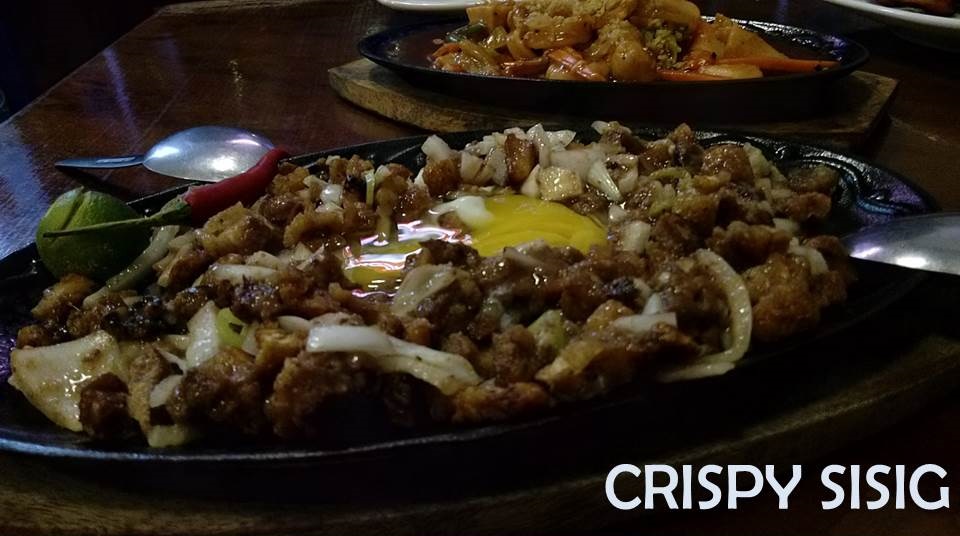
Evening came and I was feted to dinner at PACING’S HOUSE OF BABECUE. Dish served were pork barbecue, crispy sisig, spicy tofu and longanisa. The pork barbecue is a winner and I had never tasted anything like it. Jay Z has his secret formula which he got from Lola Pacing. The crispy sisig is another dish that you should develop a taste of. These two are the favorites of their patrons.

The spicy tofu and their plump and spicy sweet longanisa just made my dining princely. As if that was not enough, a pint of Arce Dairy Ice Cream is pushed my way across the table. The creamy texture of the ice cream just won me over and I would bring the empty can when I go back to Cebu as my “war booty”. Jay Z and Carla just filled me up and I could hardly move.


They have not forgotten that I just had a rough week spent outdoors and travel and they have not forgotten either that I will be visiting the outdoors again for the next two days. Yes, I will be at Antipolo City early tomorrow morning to be with the training staff of CLIMBER as they opened the eighteenth batch of their Basic Mountaineering Course.


Document done LibreOffice 5.3 Writer

Sunday, September 15, 2013

WARRIOR REVIEW: SE Wristband Compass


A FRIEND RECENTLY ASKED me to go over and test a merchandise that he received of late from his trading activities. This is a button compass that used to be popular in the ‘80s and ‘90s as an accessory for diver’s watches, notably a SEIKO Diver.

The main body is made of plastic in black color which hold the bezel and a floating dial that would rotate when the compass is moved clockwise or counterclockwise and this act as the magnetic needle. The dial is also in black which is housed inside a transparent plastic filled with liquid.


The cardinal direction symbols like N, E, S and W which are located on the rotating dial are painted in luminous green as well as the direction arrow located above the N. All other features are painted white to include those found on the bezel. I test the compass in the dark and it glowed. After about three hours it lost its luminosity.

The bezel could be rotated by hand and you would hear a click each time you move it left or right. The bezel is notched to accommodate easy manipulation by thumb and forefinger. By the way, each click is equivalent to 10-degrees according to its packaging literature. However, I could not determine the accuracy of this information.


At the back is a narrow slot which has a flexible cover that could accommodate most wristwatch strap sizes not more than 1/8-inch thick and not beyond 3/4-inch wide. It could be easily slipped on the strap but I doubt if it could hold itself fast when it is accidentally snagged.

A small triangle jutting two millimeters on the housing beside the bezel act as the orienteering arrow. Smart design for a directional instrument whose function is limited due to its size. General direction-wise, it could hold its own when placed side-by-side with a standard compass but is accuracy is suspect when I used it for some serious navigation exercises.


This wrist-bound compass is made in China for use in the United States of America. A health-hazard warning is attached at the back of the package pursuant to California Health and Safety Code.


According to its label, the compass is great for camping, hiking, hunting, fishing, outdoor activities, travel, etc. Without a doubt, it could be done but I believe it could not approximate the performance of standard-sized compasses.

It is just too small and lacked the handling capability that bigger compasses possess. It is just too small to project its details to one who is visually-impaired under dim-light conditions. It is just too small to be noticed in your presence and would likely get misplaced.


Its lightness is its only advantage. Although, it accomplishes the function of locating the cardinal directions but beyond that I would rather trust a compass with base plates. This button compass would never replace a standard-sized compass but this is a great backup compass if in case you broke or lose the main one.

Document done in LibreOffice 3.3 Writer

Friday, March 15, 2013

WARRIOR REVIEW: Rivers 3514M Hike Boots

THERE ARE ONLY TWO things that are very valuable to me when I am outdoors: a functional knife and a good pair of shoes. Why the shoes?

Good question. The shoes protect my feet from sharp stones, pebbles and thorns. I cannot travel a good distance without a comfortable pair of shoes. I cannot climb a mountain or run down a trail without a sturdy pair with threaded soles. So now you know why shoes are tops in my list of items.

Used to own good and not-so-good pairs which I acquire either by cash or through hand-me-downs but due to constant use, compounded by heavy loads upon my back, these got damaged. There came a time when my need for a pair of shoes got so very critical that a first cousin in Sydney, Australia came to my aid and promised to gift me a pair.


Last August 4, 2011, that promise became true as it was personally handcarried by Alice Lavilles-Reyes to my waiting hands as we were having a gathering to welcome her and her husband, Ollie. It is a RIVERS 3514M Hike Boots in brown and tan combination. What timing! It came at a time when I really needed a pair of shoes to do a camp assessment at Mount Manunggal, Balamban, Cebu the following day for a wilderness safety seminar.

RIVERS is an Australian brand but their products are assembled and made in China with the materials provided and shipped by the company to their overseas factory. Basically, I don’t patronize goods coming from China due to its inferior quality, poor craftsmanship, the state’s propensity to use slave labor and for a thousand and one political reasons.

I try the fit of the shoes and I instantly liked the feel that I shoved my thousand-and-one-political-reasons down to the backburner. I am consoled though by the thought that the leather, fabric, rubber, glue, thread and the whole design are made in Australia.


So the RIVERS 3514M Hike Boots got its first test at the dirt road going to Mt. Manunggal on August 5. The first thing I noticed about the shoe is that it is very light. The three-tone earth colors appeal quite to me due to its simplicity and would go well with whatever I wear. Besides, I believe I am the only one wearing this brand here which gives a fine accent to my personality.

I begin to feel the quality of its material as I change gaits as often as I could to test its flexibility, comfort and craftsmanship. It fits my Size 9-1/2 feet perfectly as it is a Size 10. I try it on grassy grounds and wet trails and the threads grip the surface well. The real test would be the route going down to Tabunan. Kapiyoan Trail is a good testing ground as it is a steep route with washed out surfaces and an abundance of polished rocks and mossy stones.


I lose a bit of balance as I slip on a steep but slippery part yet I am able to recover without falling down as I start the descent. I was not able to dig a heel onto dirt as it is rounded and angled. I long for those old-school type of soles where it is in right angles and could dig deep into surface and stop your unintentional descent caused by gravity.

I slow my pace a bit and the soles held on the same surfaces until I pass by vegetated areas where presence of exposed roots and broken branches are numerous. Common sense dictates that no amount of good rubber would hold on wet wood especially along the grains so I chose my steps carefully but tried a step or two on bare roots. I use the foot arch but I slip dangerously sideways.

By now, boulders of all sizes begin to appear along the trail. This is the ultimate test. I start testing the grip on different kinds of rock surfaces except that which I find angled and very smooth. It held. I take steps on several rocks and I am satisfied. I used the sole edges on angled rocks and it held after a short slip of about an inch.

I jumped from one stone to another and I get to temporarily develop my confidence in my footing but when it came to a ridged rock my footing slid sideways. I stepped on it using the arch of the shoe which could not get a grip. The same result as when I step on a root earlier.


The sole is foam-injected to make it act like a soft cushion when landing on hard surfaces. The thread is of radial pattern with wave designs. One wave line run from instep to outer-heel tip and this causes slips when you step on rounded surfaces along the arch. I see no good reason why the designers decide to omit threads along the middle of the sole.

By now, I reach a stream. I opt to cross the stream with my boots on. The shoe strings are just too thin to effectively hold the boots together and they tend to slip or loose its tightness when pressure is applied or when it is wet. I may have to replace it with a thicker one from a discarded pair.

I used the same RIVERS 3514M Hike Boots the next day – August 6 – for work. I am amazed that the shoes dried quickly even as I walk a kilometer on an asphalt road that had been made wet by an early morning rain. I even walked intentionally on a wet steel plate tilted at thirty degrees but it held on and I did not feel a tell-tale sign of a slip.

I guess, this pair would serve me well in all my outdoor pursuits like multi-day hikes, crossing streams, running trails, climbing mountains or just teaching people survival skills in a bushcraft camp. I care my RIVERS like a baby and use it, as much as possible, only on the trail. It had seen constant use and work and is a sturdy pair.

But last August 26, 2012 – more than a year since I own these – the soles showed signs that it is going to dismember itself from the upper fabric, so I brought it immediately to a cobbler and have the sole sewn tight to the uppers for good. A gesture that would bring in more miles and years of its life.


Although it lived up below my expectations in a January 13, 2013 exploration of the last wild place of the Babag Mountain Range, Cebu City and, before that, it had taken me to a lot of mileage from Mt. Manunggal to Mantayupan Falls, Barili and walked on the Mananga River from Buot-Taup, Cebu City to Camp 4, Talisay City five times in a span of a year.

The RIVERS 3514M Hike Boots is, definitely, one of the best pair of hiking shoes I ever had. It had chalked up eight cross-country hikes for my Cebu Highlands Trail Project and will be ready when the ninth comes. I would purchase another pair soon as it is listed at an approximate US price of $30.41 which may change anytime but, just the same, it is quite affordable considering that it is within the P1,250-P1,350 range.

I would recommend this hiking shoes anytime for those who are into hiking among mountain trails for extended days and those who are into recreation camping.


Document done in LibreOffice 3.3 Writer

Saturday, January 12, 2013

WARRIOR REVIEW: Habagat Viajero

I RECEIVED A Habagat Viajero from a first cousin on April 6, 2009. Her husband bought it brand-new in 2002 during his evangelization travels in the provinces and it has a classic three-tone color of blue, green and black which the latter dominate the color of hardware, backside and straps. I first saw this product in 1994 when the Habagat Outdoor Shop opened a branch in SM City in Cebu.

This bag is made for the outdoorsy type of business travelers by the look of its design. The main compartment has a 40-liter storage space and a big rectangular front pocket. The large compartment can be opened by big handy dual metal zippers. It is sturdy enough to accommodate the weight of five laptops and other heavier small items.


It has a detachable single shoulder sling that can be adjusted in length and can also be hand carried like an attaché case with a stitched carry handle. A pair of padded shoulder straps are added and can be stowed back and secured by a zippered flap. Slip pockets are located on both sides while two compression straps are found on either side.

Two flat aluminum support bars are placed well hidden inside the bag to give it rigidity. Breathable mesh fabric are incorporated at the back to wick away moisture and sweat while a built-in padded back support and padded hip straps are added to give comfort to the bearer. High-density plastic ladder locks and clips complement the Viajero's overall look.


I kind of liked the design of the Viajero as it can be converted either in formal carry or in rugged outfit doing away the idea of buying two bags for two different occasions. Hmm. Sometimes, I travel in a semi-formal attire and I couldn't wait to use it the next time I set sail on a trip. But that would wait. I have to test the Viajero on a rugged mountain trail and use the shoulder straps instead and find out how it can perform there.

So, on the night of April 25, 2009, together with Boy Toledo and Ernie Salomon, we embarked in a night navigation training along the trails from Napo to Mount Babag – the city's highest peak at 752 meters. We employ and use only one headlight for this trek with me leading the pack. I placed a torrid pace and there was no moon in the sky and what lights available, aside from the headlight, came from the stars.

In the darkness illuminated by very faint starlight the trail was barely discernible and I never encountered difficulty following it except, perhaps, when crossing a dry gully and on uneven surfaces. It was in this latter condition of the trail that I find the Viajero unstable swinging side to side causing me off-balanced several times even when I adjusted the straps closer to my torso.


Inside of the bag were my wool sleeping bag, tent, a liter of water, clothes, a flat bottle of rum and other items and I stowed these all evenly. The big metal zippers snapped shut all these items safely inside and I have trust on those zips. The shoulder and hip straps together with their HDPE hardware did all right and ably supported the whole weight of the cargo.

The design of the bag tend to place the center of gravity outward as it has the tendency to sag making the whole gear swing side to side in a wide arc. Although the gear's material composition is without question, the Viajero is not suited for very rugged travel by foot on long distances due to its unstable fulcrum.


However, it is most suited for short walks, day hikes and island hopping if you insist on using the bag's shoulder straps, but it is most perfect and chic when using the shoulder sling and travel business class in a plane.


Document done in OpenOffice 2.1 Writer.

Monday, September 10, 2012

WARRIOR REVIEW: Index Titan 2 Safety Helmet


SAFETY IS PARAMOUNT when you are astride a motorcycle, whether as a driver or as a passenger. The motorcycle is vulnerable to road accidents due to its two-wheeled design that demands balance and bursts of speed to stay on the road.

Unlike four-wheeled vehicles, which have adequate protection on its body to protect the driver and passenger, motorcycles do not have that advantage. In a collision with other bigger vehicles, the driver and/or passenger gets the brunt of damage caused by physical injuries and most of the statistics in fatalities.


Head injuries are the most common causes of death in vehicular accidents involving a motorcycle. The head is that body part where it needs protection the most and road-safety proponents insists that the safety helmet should be the most basic safety equipment that should be worn by a motorcycle driver and passenger. No ifs and no buts.

The safety helmet shell should be sturdy enough to withstand a strong impact. The liner should cushion the head from any blunt object that would strike the shell. The straps should secure the head and would not separate the helmet from the wearer during a road accident. The helmet shall cover most of the face and shall have a transparent but flexible visor to protect the eyes of the wearer from dust, shards and ultraviolet rays.


However, I would like to emphasize that safety helmets do not prevent head injuries or death; it only lessens these. The driver should be responsible for his/her own safety and his/her passenger as well but the wearing of a safety helmet increases their chances of survival. The motorcycle owner should be prudent in choosing the best safety helmet possible.

There are many commercial brand names and models of safety helmets offered in the market today but few have passed the safety standards set by the Department of Trade and Industry (DTI) and the Land Transportation Office (LTO) here in the Philippines. A hologram sticker bearing the Import Commodity Compliance (ICC) mark would attest to the helmet’s warranty of safety and is issued by the DTI.

Since the LTO and their deputized agencies are in a strict campaign to implement Republic Act 10054, otherwise known as the Safety Helmet Law, and penalize those who are wearing sub-standard motorcycle helmets; my office decide to purchase seven units of INDEX TITAN 2 Safety Helmet. All are in frost-blue color with the ICC sticker already adhered at the rear. Gleaning from its product literature, INDEX safety helmets are made in Thailand.


Construction of INDEX TITAN 2 Safety helmet shells reduce impact energy by evenly distributing it over the surface and not concentrate on a particular part of the helmet. The surface of shell is made to protect against UV rays and has an anti-scratch component. It has a ventilation system integrated into the helmet allowing airflow to move from forehead to back for a more comfortable wear.

The liner absorbs and reduces the impact energy distributed by the shell. It is made of polystyrene and is neither hard nor soft. The soft cushioned lining allows the wearer to fit the helmet properly and prevents the helmet from shifting during the motorcycle ride. Optically correct pre-formed visor gives better vision to the rider. The visor has an anti-scratch coating as well as protecting nearly 100% the eyes of the wearer from UV rays.

Helmet retention system is satisfactory with the addition of high-quality buckle and chin-strap. The strap is securely fastened under the chin to prevent the helmet from separating from the wearer during an accident. Double D-ring metal locking ladders increase a better retention arrangement and doubles as an eye to hook securely underneath the motorcycle seat.


I have worn many inferior safety helmets in the past, a lot of them made in China bearing indiscernible names and of questionable quality, but INDEX TITAN 2 Safety Helmet fulfilled my well-being with its assurance of its credible adherence to safety standards. I drive a motorcycle and my INDEX safety helmet gives me added protection and confidence to ply the roads in any conditions and time.

INDEX TITAN Series Safety Helmets are available in all establishments here in the Philippines that caters to motorcycles, parts, accessories and maintenance services. My INDEX TITAN 2 Safety Helmet was bought from Newstar Motorcycle Parts in Mandaue City.


Document done in LibreOffice 3.3

Thursday, February 9, 2012

WARRIOR REVIEW: Bamboo Millennium Patrol Shoes

LAST JANUARY 2011, DES Footwear, makers of Bamboo Military Shoes, approached me and made known their intention to test their locally-made shoes. This, they believe, would help them upgrade their product and procure the best materials that would give them better confidence to penetrate the market.

Their factory is located in Basak-Pardo, Cebu City, Philippines. Basically, their shoes are MADE IN CEBU; so very distinct from the more popular cheap shoes made in Carcar, which is also a part of Cebu. Their shoes, just like in Carcar, are hand-made and done by skilled local labor and are stitched for long wear and good shape retention.

And so, I was given a free pair of their Millennium Patrol Shoes and another free pair of their Charol Parade Shoes, both Size 10. Their parade shoes are made of shiny black leatherette uppers and locally-made rubber soles. I have worn the pair rarely and these have not seen much abuse unlike that of the patrol shoes.

The patrol shoes are made of genuine leather, dyed black, with local rubber soles. Inside are fully-padded insoles and flexible shank for extra support. It had seen constant pounding through walking and day-to-day use going to the office and on the field and holds all my weight of 95+ kilos. However, by May, the soles start to crack and, in June, water leaked inside.

In July, Bamboo Military Shoes replaced the much-abused pair with another free pair with much better rubber soles that is hard as it is oil-resistant. Aside from the walking and the constant daily use, the shoes have been used regularly to push the motorcycle stand upright which use the left foot and crank-start it with the other foot.

Likewise, the Millennium’s look and feel serve well in very official functions and setting. Although designed for rugged use, its simple design could very well complement any formal attire and the leather is very easy to buff and shine or daubed with commercial-dye solutions.

According to Mr. Fermin Uy, the bulk of their sales are from the Charol Parade Shoes which are bought and used by policemen, security guards and criminology students. Their patrol shoes have not caught on the trend yet but I can’t see any reason why these sturdy shoes would not be worn someday by civilian security forces and the military if it were advertised through conventional means.

Since DES Footwear is a small company, funds to spend for advertisement are very scarce and whatever income collected from sales are diverted instead for production expenses which are increasing every quarter due to an influx of demand. It is for this intention that DES Footwear decided to utilize this person to test and market their products.

This writer is indeed very glad to have DES Footwear as a sponsor to further his passion as an adventure-travel writer. This greatly helped me to possess a sturdy pair of shoes for my journeys which, sometimes, are a part of my day job as an officer of a reputable security company.

Another free pair of Millennium Patrol Shoes did land on my desk this January 2012 compliments of DES Footwear and I am proud to announce (as well as endorse) this in Warrior Pilgrimage. Prouder still I am, to have been given this privilege of wearing a product made by Cebuano hands.

The shoes are now available in the market and, if it interests you to own a pair, the prices are One Thousand Five Hundred Pesos (P1,500.00) for the Millennium Patrol Shoes and One Thousand Two Hundred Pesos (P1,200.00) for the Charol Parade Shoes. These are much cheaper than the cheapest competitor and a quality that is at par with established ones.

If you would like to order a pair or several pairs, I may be contacted at mobile phone number +639237162705 or email me at pinoyapache@yahoo.com.


Document done in Libre Office 3.3

Tuesday, November 1, 2011

WARRIOR REVIEW: PinoyApache's Tomahawk

MY LITTLE AXE, which I fondly called as my tomahawk, have been with me since the year 1999. It is one of the items that I have collected or acquired during my “warrior pilgrimage” years. It is very light and it is forged of highly-carbonized steel.

I presumed, it may have been made from a leaf-spring of a European or American-made automobile suspension system of long ago and the “eye” have been arched gracefully whereby the blunt edge kissed the main head at the middle section and securely welded giving it the shape of a teardrop which is good enough to fit a well-sized wooden shaft - about 1.2” x 0.75” thick.

The cutting edge is sharp and very narrow. “Lantip” as we Visayans called it, I have seen it cut through the diameter of an old-school six-inch nail, accidentally dismembering the top from the rest in a cataclysm of one bright spark as fine steel clashed against fine steel! Such power held in my hands is something worth respecting and possessing.

I remember the axe when it was yet in the hands of the original owner. It was just treated as an ordinary tool and used mainly in chopping wood for the earthen hearth then laid on the ground or thrown aside when not used. I noticed the teardrop-shaped “eye” and I immediately concluded that this simple axe is different from the axes that I have seen or held before.

On the spot, I offered to buy the axe for two hundred pesos plus another axe as replacement to save the man the trouble of looking for one. For the woodcutter, it is just like a great bargain which gave him advantage and saved him from wangling a better price. For me, it is like I just found a rare pearl.

Immediately, I set to work on the first wooden shaft. The wood is an exotic kind which I find hard to identify, but I carved it with my own hands. The shaft I designed is not straight, but is gracefully curved imitating the style of early Filipino weapons art. What made it more different is that the axehead is secured in an American Indian fashion.

The shaft is seventeen inches long. The axehead could not hurtle itself out from the top of the shaft and could not slid down the handle for a chord is tightly wound around the foreshaft reinforcing the latter from breakage. Two hawk feathers are tied at one end of the chord to aid its flight when thrown.

The shaft protruded three-fourths of an inch above the axehead and is much thicker than the rest and that already ensured my axehead that it will not dismember itself from the shaft like most axes do when under the pressure of hard use and so is safe to use. I don't either need small iron spikes that are inserted above the shaft so wood and steel would clasp in an unstable Western-style fusion.

The good thing with this axe is that its “eye” is wide as it is long. Meaning, the wooden shaft that held the steel head is thick enough and could withstand the pressures of the strength that drove it or the weight of both hand and steel head that strike wood. Even so, the first shaft broke during a day of cutting felled trees and debris after a typhoon later of that year. It was not a good wood.

I then began to experiment on different types of wood after that and I made carvings on the shaft for aesthetic feel and for secure gripping. Woods used were guava, star apple (sp. Chrysophillium cainito), golden mahogany (sp. Shorea laevis or yakal) and rosewood (narra). All did not stood the hard work I used during the chopping and splitting of wood and during the time when the tomahawk is set free to whirl its way into space and find true target.

The pleasure of steering my tomahawk and make a blood-curdling thud on a wooden target is very exhilarating. It had become my past time then and it came to a point where I experimented on different shaft designs and on different distances. I found a design that enabled the axehead to embed deeply on its target when thrown and another design that could withstand the rigors of hard work.

The shafts are both made from a yellow mahogany wood (sp. Vitex parviflora or tugas). The first design came from a wooden relic. A survivor of a great conflagration in 1989. A wood that had been acquired by my late grandfather forty years earlier of that disaster. It is carved with Zuni patterns and tapered off at the end. The word “Cherokee” is etched on the wood and is named after a great and noble people of the “trail of tears” with which my second son is proudly named after.

The second design is very familiar. I bring it all the time during my bushcrafting sorties on the mountains. It is short – about 11 inches – and curves in one stroke giving me optimum leverage to cut into whatever I chop. The part of the shaft that held the head is angled abruptly from the rest to project an “upright” position and optimize its cutting power. It is also carved with Zuni patterns with an American Indian and headdress to graphically symbolize my woodworking trademark under the name “Cherokee”.

The American Indian image from my tomahawk shafts and on anything that touched wood would become a symbol of remembrance for one noble race that have been obliterated almost into extinction by the perverted values of a different culture that turn a lustful eye upon its land and its resources. I am part of that kind and I harbor solidarity with my brothers across the watery divide.

From that image was born the first bushcraft and survival guild in the Philippine Islands south of Subic Bay – Camp Red! Traditional crafts have been taught by this writer to his brother Filipinos and many have embraced this skill which, after all, are really embedded in the subconscious of every indigenous people, mixed blood or not, and all it does need is just a little “fire” to inflame it.

So, back to my tomahawk, I kept and cared for it like a baby. I sharpen it all the time and apply a thin coat of oil or marrow to keep out rust. I refused to have my tomahawk lay and touch ground. When I finish my work, I embed and kept it erect on wood. When not used, I separate steel and shaft and kept the former in a special case.

Sadly, during the height of my enthusiasm for the throwing 'hawk, there were no ideas yet of what is a YouTube. All my activities with my tomahawk (and those flying blades-mosquito coil stands-machetes-crowbars-heavy axes-Gillette blades-pseudo police badges-and every pointed/sharp objects) were unrecorded.

Not until one day in 2010 did I muster the time to record myself, with the help of Manwel Roble, at the foothills of the Babag Mountain Range in Cebu City throwing my dearly beloved tomahawk and showed to everyone in the Internet that what I write here is really true. I don't know yet of anyone here doing this thing in a “live” video but I welcome their camaraderie if ever one shows up. I waited for this long.


Sad to say, this skill is not for everyone. You have to find your “vision quest” and, once done, you will have the “book of life” at your disposal. It is a path less travelled and very narrow and without the comforts and pleasures that sedentary living could provide.

I have journeyed far, high and wide across the archipelago and I found my true path. My tomahawk is one of the things that I have come to understand as something akin to being a companion. As one esteemed bushman have commented to me in Facebook: it is a bond that is hard to break.

Document done in Libre Office 3 Writer

Wednesday, September 14, 2011

A DAY AT THE RANGE

I AM A GUNLESS SOCIETY advocate but, at the same time, I teach people how to use guns. I may sound like an oxymoron and that I am. If you have another word for it, you may call me such. I don't care.

I have gun skills that have lain inert for some time and that skill is going to be used in the furtherance of my advocacy. The time has come for it to be imparted to other people provided that the principles of a gunless society are also discussed before the actual basic firing is even started so the participants could recognize the destructive power of guns.

An opportunity knocked on April 3, 2011. Security officers and office staff of a well-known local security agency availed of my services to conduct a Basic Gun Safety and Firearms Proficiency Training in a remote firing range south of Cebu City. I introduced the participants to the most fundamental points of gun safety; identification of basic gun parts and its main accessory – the cartridge round; general gun terms; the laws that regulate its proliferation; and the main government agencies tasked to enforce gun laws and its regulation, licensing and permits.

Then my lecture moved on to the “dominant hand and the dominant eye” principle; the different shooting stance; proper sight adjustment; breathing techniques; and how or when to squeeze the trigger. At the firing range, I assumed the role of range warden and refreshed the firers the basic gun-safety rules before the first participant came forward to grip a gun.

The course I designed is so simple and very basic and applies to both male and female. Five rounds for a firing stance at 10 meters distance with weak hand supporting dominant hand shooting a caliber .38 revolver; another five rounds for a firing stance at 5 meters distance with only the dominant hand firing a revolver. Same styles are repeated, this time with a 9-millimeter pistol at five rounds each.

Revolvers used were an Armscor 220, a Rexio Jaguar and a WORLD-MPC Lapulapu; 9-mm pistols were an Armscor GI 1911 and a FEG Kassnar. Ammo fired were reloads from a firearms trading store located in Salinas Drive, Cebu City. All five female and nine male fired twenty rounds each for both types of gun or ammunition. The activity ended at 4:30 PM after all nine male firers fired two buckshot rounds each from an Armscor Buddy 20 pump-action shotgun from 7 meters distance.

I also have my day testing all the firearms on use to include a palm-sized single-action RG caliber .22 revolver, a BUL Cherokee 9-mm pistol and a Colt Mark IV caliber .45 pistol. For a scale of one to five, I rate the following according to its easy operation and feel, mechanism design, recoil and target consistency:

      Armscor 220, Caliber .38, Revolver, Philippines 3.5
      Rexio Jaguar, Caliber .38, Revolver, Argentina 2.0
      WORLD-MPC Lapulapu, Caliber .38, Revolver, Phils. 0.5
      RG, Caliber .22, Revolver, Germany 0.5
      Armscor GI 1911, 9-mm, Pistol, Philippines 3.8
      FEG Kassnar, 9-mm, Pistol, Hungary 4.5
      BUL Cherokee, 9-mm, Pistol, Israel 5.0
      Colt Mark IV, Caliber .45, Pistol, USA 5.0
      Armscor Buddy 20, 12-gauge, Shotgun, Philippines 4.5

However, the rounds used during testing (except for the shotgun) were reloads and old ammo stock and that make operation of the above firearms very complicated and subjecting these to extreme mechanical vulnerabilities beyond what most are designed for.

It feels good to fire a gun again and I noticed that the holes I make on the cardboard targets are tight as was the time I last leave them many years ago. Some habits die hard so they say. I must admit it has stayed except the guns. I don't own one.

Document done in OpenOffice 3.3 Writer

Tuesday, June 1, 2010

OPINION REVIEW: Baikal 35-Liter Backpack

I FOUND MYSELF RESTLESS on April 12, 2009 and I decided to visit my good friend, Ernie Salomon, in Guadalupe, Cebu City. We both were having a rare day-off from our weekly training climbs in Mount Babag, a height which is better accessed from Guadalupe and then from Napo in Sapangdaku.

It was a fine day devoid of rain and he offered me, over glasses of cold beer, his black Baikal backpack for four hundred bucks. “Got bills to pay,” he says. Hmmm...the bag looks cool enough to me and I hadn't seen one carrying this kind - - - SINCE. I liked the idea of just me carrying a Baikal. The black color is a cinch for me and we both consummated the deal. It was a done deal. A heaven-sent bargain.

I saw the Baikal for the very first time when Ernie carried this on his back during our third session from Napo to Mt. Babag on October 1, 2008. He says he found and bought this for only four-fifty from a pre-owned stall in Colon and I envy the guy for his persistence. I even took a photo of this on that date.

On May 10, 2009, I donned the Baikal for the very first time on the trail and I find it superb. It fits my body frame very well and could stand all the heavy jerks and movements I impose on myself like trail running.

My Baikal has a 35-liter storage space on its main room, a secondary compartment and a third pocket and all are secured by dual zippers. The synthetic fabric is durable-looking and I have trust on those skins. An arched carry handle is located at the top and, to me, I find this unnecessary due to its weight.

The shoulder straps are three inches wide at its widest complemented with HDPE hardware add-ons and a pair of thumb straps with the Baikal name printed on it. Slip pockets made of light mesh fabric are located on the left, the right and front. The front slip pocket, however, have two compression straps to securely hold things placed inside.

Padded back supports are located in the lumbar area and the in-between-the-shoulder-blades part to give maximum comfort to the carrier. In between these two is a floating synthetic nylon mesh that is designed to wick away moisture and give breathing space to the back of the carrier.

Compression straps are found on each side of the pack to adjust room space and at the same time securely hold a medium-sized item that may be placed at the side slip pockets. The trusty straps can be lengthily adjusted by patented Life Guard® ladder locks while the Baikal name is prominently emblazoned on the buckle of the waist strap HDPE lock.

Deep inside the main compartment is a zippered pocket reserved for placing a water bladder to supply your liquid requirements while at the bottom of the bag is another zippered pocket containing a light-blue rain fly. It can be quickly retrieved out when you use it to cover the whole bag during a rain and can be easily stowed back after use.

A thin PVC board and two flat steel rods are incorporated inside the back to give it a rigid look. The backpack is second-hand, at least, it is original and I find just one minor kink that doesn't affect my performance and the pack. I didn't have to bargain, threaten and cajole anyone for it. It is a standout.

Well, I just found a perfect backpack.

Document done in OpenOffice 2.1 Writer.