Showing posts with label Sibonga. Show all posts

Friday, October 22, 2021

2021-041 | ADRENALINE ADVENTURE HIKE: SEGMENT III

BOUYED UP BY THEIR SUCCESS of Segment I in February 2018 and Segment II in May 2018, Team Adrenaline Romance and Friends is on the right track to making their bucket wish of the Cebu Highlands Trail doable. They are now ready to snare the third pennant – Segment III – this August 18 and 19, 2018. It had become a commitment. A concrete undertaking which they now have the feel and the grasp. 

We started from the Cebu South Bus Terminal at 05:30 bound for Mantalongon, Barili; the terminus of Segment II. The blogging couple, Gian Carlo and Sheila Mei, were excited of another opportunity of another outdoor exercise and witness the other side of Cebu that have been denied them. With them were Apol and Kier and both are multi-disciplined outdoors enthusiasts just like the couple.


The bus dropped us off at the Mantalongon Public Market at 07:40 and we immediately searched the place for something to fill our tummies. We found one small family-run eatery, still closed, but through our urgings, opened prematurely to accommodate us. We ordered a breakfast of steamy fish soup, local noodles, omelet with bitter gourd and rice. 

Segment III starts from Mantalongon, Barili and goes south to Mantalongon, Dalaguete. Normally, this walk would have taken me three days but, Team Adrenaline Romance decided to lengthen the mileage on the second day to compensate for waiving out the third day and reserved this activity for two days instead. That was the plan. 

We started at 08:25, going by way on a path at the back of the market which led to a low range of hills which barely had tall trees. The sun was very warm at that hour but, looking back to where we had come from, the valleys beyond Mantalongon were still shrouded in mists. We arrived at a dirt basketball court for it was shady and stopped here for a while to munch on iced candies. 

After 15 minutes, we continued and arrived at Hunob Elementary School at 09:45. We were in Guadalupe, Carcar City and, where the unpaved road meet an asphalted one, we would be walking all the way through on the “Vegetable Highway”, a provincial road constructed in the ‘90s designed to open up a corridor where produce from mountain farms can now be transported and sold.

When we walked for about thirty meters on the road, we were overtaken by a team of police personnel on motorcycles. They were from the Carcar City Police Station and they were commanded by their superior to escort us along the way. We were embarrassed about such kindness and special attention on our cause. We tried to free them of such responsibilities but they were adamant. 

When we were walking for about five minutes, a police patrol vehicle arrived with armed policemen and what seemed to be four more full-packed soldiers. They were from the Barili Police Station and they were here on the same purpose as that of the Carcar policemen. They came to reconnoiter our presence and, once satisfied, they went back their way and will wait for us once we cross the border in Barili. 

Could their sudden presence somehow connected to a suspected Abu Sayyaf member recently apprehended in Carcar City for keeping a cache of firearms and explosives? I doubt that they were profiling us because of that. Anyway, I never walk among the hinterlands, much less guide people, without making courtesy calls on Capitol and the Cebu Police Provincial Office. These are my cornerstones of safety. 

Anyway, the cops from Carcar would sprint away on their motorcycles ahead and leave us to our own company. The “vegetable highway” is so beautiful on a stretch where it goes into a small valley and up in Napo, Carcar City. On the roadsides are fruits from the milla milla vine which sustained us and relieved our parched throats caused by our physical activity, heavy loads and by the warmth of day.


When we arrived at 10:30 in a place called Lamac, in Mayana, Barili, the cops and soldiers from Barili took over from where the Carcar policemen left off. We plead with our new escorts to rid us of their duties but, just like the previous team, they insisted and even invited us to ride while, they, would walk. We gave up. We invited them, instead to lunch in a corner store where there is a videoke. 

When we started to move out at 11:30, after our siesta, we discovered that the police patrol was gone. At last, we can walk freely. No sooner have we gone for a few minutes than another police vehicle arrived with flashing blue-and-red lights. They were from the Sibonga Police Station. Again, we pleaded to them to rid us off their watch and, again, they swore to protect us as best as they could.

We dropped that idea of walking in solitude as the police patrol followed behind us in a crawling pace. We were obliged to move faster. The secret to the success of walking the Cebu Highlands Trail was not about brisk walking and having the strength to withstand the rigors of terrain difficulty and distances. It was leisurely walking. I designed the CHT for the average hiker and for practicality’s sense.


Since the first hour, we applied pressure on our pace due to the presence of policemen up ahead waiting for us or crawling behind you. When you are in that state, increasing the pace, you are bound to injure a muscle or a leg joint, you rest sparingly, arrive early on the first few hours and, mysteriously, an event which I could not explain, you would lag behind your itinerary as the day wears on.

In Segment I, we were ahead of schedule from 30 minutes to even as early as 90 minutes because, well, we walked slowly. In Segment II, we were behind by 30 minutes most of the time on the first day due to a late start but we maintained it without thinking so much about our delay and rewarded for it by enjoying the views, lots of rests and evened the day at the last hour without being stressed. 

Haste makes waste and causes grief to so many. I am always guided by this. Although we arrived at Lamac and enjoyed our lunch earlier by 30 minutes, it was caused by pressure. Such abnormal conditions on our pace would take effect later in the day or, perhaps, the next day on the weakest among us. We arrived at Basak, Sibonga at 12:30 and we were entertained by village officials with cold soda drinks.
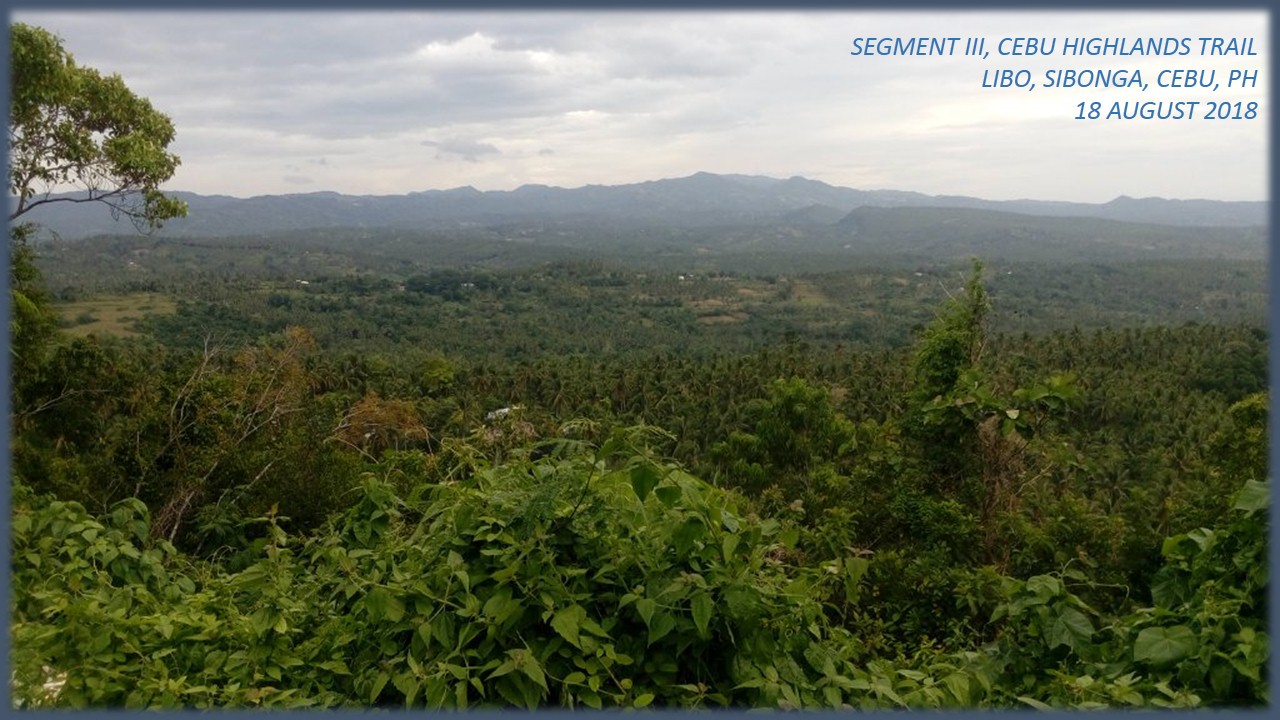
 

We overextended our rest time to 30 minutes and have to resume our journey. We arrived in Libo, Sibonga at 13:50 and we stopped for a while to let Team Adrenaline Romance study the terrain before them. What they saw was a wide valley and a peak in the distance. I told them that we would arrive on the foothills of that mountain before dusk. They were in a state of unbelief for it was very far. 

We crossed a highway and were now in Papan, Sibonga, following the same “vegetable highway”. This time it is unpaved and it relieved our feet from walking to so many hours of asphalt pavement. We get to enjoy the scenery of picturesque farms and the rural communities, notwithstanding the company of our police escort. At 15:00, we were now in Bae, Sibonga and, not far, would be Argao.

We arrived at another highway, crossed it, and we were now in Mompeller, Argao. It is 15:45. Our kind and patient policemen from Sibonga Police Station passed their responsibilities to their counterparts of Argao Police Station and the 7th Regional Mobile Battalion, who all were waiting. We were placed in such an awkward moment with this lavish show of force and concern accorded on us. 

The village council of Mompeller had been expecting us and we were welcomed to stay at their multi-purpose building. The cops from the 7RMB soon left on their 6-by-6 truck when they saw that we are now secure and safe while the Argao policemen would stay and sleep with us. Meanwhile, I secured a 5-gallon bottled water from nearby for our cooking and drinking.

The building is an unfinished structure but it is big enough to accommodate the tents of Gian Carlo and Kier. Apol would opt to hang in her beloved hammock on the posts near the tents. I chose my spot on the farthest end where a narrow space is found between fence and the health center. The cops has their hammocks too and would crowd next to mine later. 

When everyone settled down, it was time to prepare the food for our dinner. I met and had a talk with the new village head and the few people that I have befriended while I passed by here. I slept here during my route exploration in February 2015 and during my seventh day of my Thruhike in January 2017. We ate at 19:00 and slept late due to unexpected visits by locals who were curious of our presence. 

We woke to a fiery-red sunrise on our second day, August 19. Immediately, the tents were dismantled to give space for cooking our breakfast and for our packed lunch. We left Mompeller at 07:30, thanking the village officials for their hospitality. Only the two cops from Argao would go with us. I advised them not to follow us but move on ahead and wait to save on fuel which they did. 

This arrangement would be advantageous to us since we would not be pressured by somebody “minding” behind you. Anyway, yesterday’s condition, as expected, took its toll on Sheila Mei, who suffered from muscle cramps. The availability of the Willys patrol vehicle allowed her to transfer her bag there and she walked on bravely without a load on concrete road.

Along the way, as we approach Tulang, Argao, she could not force herself forward for it was very painful. Just in time, the Jeep passed by and she has to submit to the will of her physical condition and left Gian Carlo and company. After 15 minutes, we were reunited with her in Tulang where there were locals cooking just-harvested corn on embers and we joined them in the humble feast eating corn. 

After 20 minutes of rest, we continued on our journey while Sheila Mei remained as passenger of the police patrol jeep. We still have a long way to go. We increased our pace as if the police were right behind us. Apol and Kier would not mind. They are used to it. Gian Carlo probably would adjust easily since he does not worry about Sheila Mei. 

We arrived early at Alambijud, Argao at 09:15 but it is just a drop in the bucket for this day. We could only shave a few minutes from an expected hike which would last through near midnight. When your mind is focused on one thing you tend to ignore the scenery or appreciate it half-heartedly. At 11:00, we were now ahead of the itinerary by 30 minutes and took an early lunch at a public market of Bayabas, in Cansuje, Argao. 

Despite the stressful thought of an extended walk, I insisted that we enjoy a full hour of rest. By 12:00, we were raring to cross to Dalaguete before dusk but we still have a long way to go. For as long as Sheila Mei recuperates in the police jeep, we have a chance we would reach Mantalongon, Dalaguete at around 20:00. We were now in Butong at 13:15 and stopped to rest at a heritage tree. 

Next was Linut-od, Argao which we copped at 14:15; then Bala-as, Argao at 15:15. Here, we rested for a full 30 minutes to prepare ourselves for the nocturnal hike by eating bread and dousing ourselves with cold soda drinks. This time, Sheila Mei would be joining us. At 15:40 we crossed over to Manlapay, Dalaguete and a lone policeman from the Dalaguete Police Station would be our escort.

We passed by Maloray, Dalaguete at 16:30 and Ablayan, Dalaguete at 17:45. The hard pavements, walked since morning, began to take its toll on our feet. Apol and Kier, used to foot racing, ran ahead to lessen the pain. Sheila Mei cannot keep up with the pace as her cramps recurred every now and then. Gian Carlo and I had to rest when she stops. 

After a very brave effort, Sheila Mei with Gian Carlo and I arrived at Mantalongon at 20:30 or an hour-and-a-half behind schedule. We were all tired and we decided not to pursue our plan of going home to Cebu City tonight. We asked the village officials if we could spend a night at their village center which they consented. Immediately, we prepared food for dinner and ate it at a late hour of 21:30. 

At 04:00 the next day, August 20, we left Mantalongon and rode a bus bound for Cebu. We arrived at 08:30 and, I know, all of them would time in for work later and I could just imagine how they would manage to retain their balance and composure as they try to focus on their work with all those pain they incurred hiking Segment III.

I have mentioned the commitment of Team Adrenaline Romance of their wish to harvest the CHT this year or the next and they now are now beginning to assemble their own map of where their direction as adventure bloggers go. Segment III is not for the weak of tenacity and determination. The couple have it, exemplified by Sheila Mei who never wavered in her resolve to end this segment, with injury or not. 

Team Adrenaline Romance have proven that they are as tough as anybody else on any given weekend. Segment I, Segment II and Segment III were one hell of a route. If you combine the three and clinched it in your belt, you could make it with the rest of the CHT. They now have amassed a total of 166.56 kilometers or 37.5 percent of the CHT and expect them to finish the year 2019 with Segment IV. Hopefully.   

Let me then give this space my sincerest thanks to the special attention heaped upon our event like Hon. Governor Hilario Davide III; to Police Colonel Edgar Allan Okubo of the CPPO; to the chiefs of police and their men coming from Carcar City, Barili, Sibonga, Argao and the 7RMB. The same goes to the officials and residents of Basak, Sibonga; Mompeller, Argao; and Mantalongon, Dalaguete; for their Cebuano brand of hospitality which is second to none.  

Gian Carlo and Sheila Mei wrote about their Segment III experience on the Adrenaline Romance Blog under two installments: 

Cebu Highlands Trail Segment III: Barili to Mompeller.

Cebu Highlands Trail Segment III: Mompeller to Mantalongon.

Friday, June 1, 2018

CAMINO CEBU JOURNAL: Day Three and Day Four


DAY THREE :::: HIS STRONG FAITH, CARRIED HIM to two days of difficult terrain, a blunder on the first day, extreme pain, unrelenting fatigue, fear of heights and a disdain of early morning baths. Rev. Fr. Scipio “Jojo” Deligero, suffering from problematic gout on both ankles, remained unshaken. If he dropped out on the first day, the first Camino de Santiago in Cebu would have been placed in a shaky debut. But the devil cannot have his party yet. We are still in the game. 

We have churned a total of 38.80 kilometers in 26 hours of walking spread in two days and that is unbelievable, considering that the people I led barely walked outside of their homes and workplaces. The long hours were caused by a controlled pace I imposed to keep Fr. Jojo in the flow. Let us see how the pilgrims would fare in Day Three? The worst happened in Day One. It is the crucible, the deciding moment, if ever a pilgrim should abandon or proceed with his pilgrimage.

Today, July 8, 2017, is part of the dance with destiny which started two days ago. Not just for me and the rest of the pilgrims but also for the Archdiocese of Cebu, the Province of Cebu, the Municipality of Compostela and the Archdiocesan Shrine of Señor Santiago de Apostol, the parish for which Fr. Jojo is performing his sacerdotal duty. To walk it is a sacred undertaking where your soul would benefit. Yes, it is a spiritual journey.

The Camino de Santiago is a route in Spain which is more than a thousand years old and is walked by millions of pilgrims to through so many generations. It follows the route of St. James the Apostle when he left Jerusalem to fulfill his vows as one of the chosen twelve. The journey starts from your doorsteps and ultimately wind up at Compostela, a place in Galicia, where our own Compostela in Cebu got its name. Fr. Jojo wanted a Camino here.

 
My pilgrimage indeed started two days ago from my home and I am now awoken by my preset alarm in the compound of the Our Lady of Immaculate Conception Parish, here in the village of Colawin, Municipality of Argao. After I had bathed, I am all set to hear an early morning mass to be celebrated together by Rev. Fr. Mario Villacastin and Fr. Jojo. I feel blessed to hear concelebrated masses for three straight days. 

One of those who walked his own Camino is the incumbent mayor of the Municipality of Compostela – Hon. Joel Quiño. Mayor Joel have prepared himself for this occasion. He would surely be missed behind his desk, along with those volumes of documents which need to be scrutinized, re-studied and signed. But where communication signals are present, he cannot escape answering the mobile phone.

The rest of the pilgrims are the couple Jemmelyn and Roderick Montesclaros, Mizar Bacalla, Roger Montecino, Alvie Rey Ramirez and Jonathaniel Apurado, who is my subaltern and is assigned to sweep the rear. Jon have fulfilled that task during that historic Thruhike of the Cebu Highlands Trail which we did in 27 days and 400+ kilometers from Liloan Point, Santander to Bulalaque Point, Daanbantayan.

This was the Thruhike that caught the attention of Fr. Jojo from which this Camino de Santiago is now being walked after being hatched just 3 months ago. This pilgrimage route here in Cebu, would start from the St. James the Apostle Parish in Badian and would end at the Archdiocesan Shrine of Señor Santiago de Apostol in Compostela. It would follow some stretch of the CHT which would be rugged, undulating and scenic. Instead of among bushes, we would sleep in rectories.

So there is no need really to carry those bulky tents but all of us have hammocks and tarpaulin sheets. Then again, I am beginning to question myself of the wisdom of bringing these hammock sets with them? The mountain parishes can accommodate any number of pilgrims in their rectories and where space is wanting they can always knock on the kindness of their parishioners.

If and when Cebu’s Camino de Santiago would become established and be renowned, the influx of pilgrims would create an economy which would favor the mountain communities found along the route. Mountain parishes are lonely and remote for any priest to be stationed in and can bring about the best in their sacred office or, hopefully, not their worst. A visit from people outside their places would lighten up their faces and break the tedium of everyday living in far-out locations.

I believed Fr. Jojo had foreseen all these things and it is his mission, a divine one, in spite of the physical pain he is enduring day in and day out. After our provisional passports were stamped by Fr. Mario, we left his parish at 08:00, walking up the road towards the next stop. The day is sunny and warm. In a few more hours, this warmth would be intense and would bore into each pilgrim’s resolve.

 
I am used to extremes of weather and the harshness of the mountain terrain but I cannot comprehend how they could still keep up with my pace, even if I deliberately controlled it. At this moment, pain would be most felt. Are they hiding something? I see now. They carried less. The heaviest would be water and those hammock sets. They need not worry about their food. Jonathan and I carried it all and there is no sign that the supply will ever be consumed. That would be less weight, if ever. But when?

The “Vegetable Highway” brought us to the village of Bae, in the Municipality of Sibonga. I sent a text message to the Sibonga Police Station about our presence. After more kilometers of walking and I did not see them anymore when I looked back. This road twisted among and along hills and valleys. I arrive at the village of Libo at 10:30 and waited for them. It is not difficult to find their way to where I am for there are habitations lining along the route where they could just ask directions.

After 15 minutes of waiting, I sent a text message to Jon. Signal is erratic and I gave up. 30 minutes became 90 minutes and my furrows are now deep. Just when I went back to find them, I saw them midway inside a police patrol jeep laughing. Policemen were dispatched by their station to provide security and assist us if need be. They already had and are now reluctant to drop them all here. I loath joining them in a free ride. An hour of ride would be about 4-5 hours of walking in the same distance.

I just hope that nobody would see us or understood what we were doing. That idea have not come of age yet but, to my conscience, that is cheating. Forget it. I am thinking like a human again. Leave that to God’s hand. I cannot question Fr. Jojo’s wisdom. His thoughts are much deeper than mine. I am just the pathfinder and the terrestrial navigator. Interpreting divine interventions are beyond my understanding. Navigation, it seems to me, has a parallel universe in the heavens.

The patrol jeep drop us finally at the village of Dakit, in the Municipality of Barili. They took a longer route. Of course, the policemen could not drive over a trackless mountain direct to the village of Mantalongon. It would need feet to do that on a trail that is still in my memory. Oh yes, I just navigate by memory. The CHT was explored, completed and hiked through without the aid of satellite navigation systems. I preferred traditional means.

We walk the Carcar-Barili Road until we reach Mantalongon at 15:02. This village hosted me and Jon last January during the Thruhike and it was not difficult to find the location of the San Isidro Labrador Parish here. Rev. Fr. Dennis James Acedo welcomed us to his parish and hosted a dinner later on our behalf. We stayed in the old rectory for the night and the rest was most welcome.

DAY FOUR :::: I WOKE UP THE WAY I liked it to be, earlier than 05:00, as is printed on the itinerary today, July 9, 2018. After taking our baths and breakfast, we left the San Isidro Labrador Parish at 06:42. But not after our provisional passports were stamped with the parish seal by Fr. Dennis himself. I was amused at the good priest doing everything beyond priestly duties to keep his parish afloat in such difficult times and it would be best I not tell you. The stay has given us plenary indulgence since it is the jubilee year of the church. 

We followed the highway going to the boundary of Carcar City. An unpaved road to the left would be our route to the next stop tonight. The pilgrims start to recite the rosary on its third day while I sent a text message to the Carcar City Police Station. We are now on the approaches of the village of Valencia and there is a brand new concrete road. It is a warm day and the weight carried inside my 55-liter High Sierra Titan had not changed since Day One.

When you are on concrete pavement you tend to walk faster. Your mind is analyzing the length and angle of the shadows. The sooner you get out from there, the better. Valencia is a highly populated semi-urban setting and that scene would repeat itself as we walk into the next village of Buenavista. Roderick, Jem and I waited for them in a small parish of  Santo Niño de Cebu. The shady trees on the patio shielded us from the heat of the 10 o’clock sun.

 
A text message from Jon woke up my Cherry Mobile U2. They were looking for us. I gave them my direction but they interpreted it through another route. Jesus, they took the wrong way and they are a half hour ahead. I did not retrace my steps but proceed on where one of these roads would lead us. I increased my pace and the couple Roderick and Jemmelyn are game enough to increase theirs. We crossed a big bridge and we are now on the village of Calidngan. 

My group arrive first at the San Isidro Labrador Parish at 11:30. After an exchange of text messages with Jonathan, they finally found their way and reach the parish at 11:40. Rev. Fr. Benjie Contapay arrived from his sacerdotal visits in one of the villages at 11:45. He welcomed us all and gathered his staff to prepare food for us. Just lying down on the bare tiled floor under the shade of a roof is most welcome. Siesta before a meal. Whatever. My body direly needed it.

We get to take lunch at 12:30. I took many servings. We like it. For this day, nobody touched their energy bars. Warm food is better. By miles. After the fulfilling meal and the cold refreshments, the temptation to go horizontal again is so strong but we have a long way to go. By 13:00, we say goodbye to Fr. Benjie and his staff and took to the rough roads once more and encountered our first rain. In an hour, we were now crossing over to the village of Balungag, Municipality of San Fernando and I immediately dispatched a text message to their police station.

At 16:00, we are now at the village of Tubod. A free-flowing natural spring refreshed us and we topped off our water bottles. From hereon, we would be traversing over the “carabao highway” towards the next Municipality of Pinamungahan. This is a trail that had been carved deep by many carabao sleds over the years and today I have seen and walked it for the very first time in its muddy state. It is quite nasty and tricky. I can hear angry and excited voices behind me. I slipped once but I cannot know of how many times each pilgrim had.

The slow progress carried us till dusk. By the time we reach a road it was already 18:00 but the presence of a store selling cold drinks brought back the pilgrims’ strength and composure. Across us is another trail, downhill and rocky. In daylight, you could see the Lamac Valley but it is better to negotiate it at nighttime with Fr. Jojo. He just cannot stand looking from a high place. He can never be a saint. You see, saints are placed on a high pedestal on the highest places outside of a church facade. Haha! Just joking.     

 
Guided by lights and by helping hands, Fr. Jojo made it safely down to the village of Sibago, in Pinamungahan. It is 19:45 and the other pilgrims kept asking me how far the village of Lamac is. Signs of fatigue and pain. They now felt it all. Who would not. I felt it too and the pain on both my feet are great as well as on my shoulders where the pads of my heavy backpack rubbed. We are now walking on dirt road and I was hoping to find a motorcycle for Fr. Jojo. It never came and, in these places at these hours, everything stops to a standstill.

Stepping on a concrete road raised everyone’s morale. A few houses still have lights and then, after more walking, the first local seen outside a house. We asked when there is someone out there. Nobody trusts people who travel in darkness. Everyone is suspicious of us even though we have a Roman Catholic priest and a municipal mayor in our midst. Of course, we do not advertise that with banners and megaphones. We are just pilgrims walking on the Camino de Santiago. We liked it that nobody shows interest on what we do. The hinterlands are quite different from urban areas.

At 21:00, after negotiating a few streets, we arrive at the San Isidro Labrador Parish of Lamac. Rev. Fr. Wilfredo “Boy” Genelazo welcomed us with a case of cold beer, cold lemon juice and a warm dinner since he knew of our coming. After almost an hour of happy conversations, Fr. Boy facilitated for our free stay inside the Hidden Valley Mountain Resort. As soon as I got settled for a half hour, I took a bathe. Dreamland automatically took over.

Total Distance Walked: 53.33 kilometers.
  Highest Elevation Gained: 1,961 feet. 


Document done in LibreOffice 5.3 Writer

Wednesday, January 17, 2018

THE PATHFINDER

I HAVE PROMISED DR. SHAWN ESPINA that I would be back. I stayed overnight last February in their farm estate, Camp LOV, located in Tubod, Sibonga. That time, I was pampered well with rich but healthy food that was sourced from the bounties of their organic farming. They developed, grew, fed and prepared these things – plant and livestock – for soon they will be opening Camp LOV to visitors, in a setting of agricultural tourism and the healthy lifestyle fad.

They have designated camping grounds for tents and hammocks for those who would stay overnight, a meditation nook, a dedicated path to tour around the farm estate, which is halved into two by the presence of a farm road that connect Sibonga with Colawin, Argao. The farm is accessible by SUV or pickup trucks and by motorcycles. I took a motorcycle the last time but, today, April 7, 2017, I am inside a Toyota Hi-Lux double cab, driven by Markus Immer. Going with us is Jonathaniel Apurado.

Jon have walked with me during that great Thruhike of Cebu from Liloan Point, Santander to Bulalaque Point, Daanbantayan for 27 days last January 17, 2017. It was one of my greatest adventures and we held the outdoors community in awe and unbelief with the feat. Markus, on the other hand, lent his support to the Thruhike by leading the supply run on five different rendezvous points and even walked the last 40 kilometers or so with us. We three deserve tranquility in a peaceful place like Camp LOV.

We arrived at Camp LOV at around 11:00 and we three proceed to a couple of big mango trees, past the pigeon bean (Local name: kadyos) plot, to set up our hammocks. Coconut tree trunks provided us places to tie our hammocks and the overhead shelters. We choose the kind that has the tops leaning away from us. There were just few places which favored me and Jon. We gave the privilege of the best spot to Markus on a mango that has low branches. The day was bright and sunny but breeze came uninterrupted.

When we were done, we proceed to the lanai where Doc Shawn and wife, Doc Jacqueline, were lounging under a shaded pergola. It is a warm day but there is breeze that blew away the warmer air. A few minutes passed by and the most awaited Camp LOV moment of organic food got served 15 past twelve. A prayer of thanks to the Almighty for placing me on the right place on the right time. He has a task for me tomorrow and how He prepares His servants well before going out to battle.

After the meal, Doc Shawn talked to us about tomorrow’s activity. What we would do is find a route from the highway somewhere in Bagacay to Lindogon, where the Shrine of the Virgin Mary is located. It would be a pilgrimage route, since it would be faith-related. His son Mico would arrive soon and he would bring his quadcopter drone to support the exploration.

Even without the benefit of a map and compass, much less with a GPS, I found tomorrow’s exploration a walk in the park. I have done much harder and longer ones before. The 400-kilometer Cebu Highlands Trail is my crowning glory. It took me almost six years to complete it. But a pilgrimage route is different. It has more meaning. I would dedicate tomorrow for bigger things and as preparation for Cebu’s own Camino de Santiago which is now on its incipient stage.

After about two hours on the lanai, we three went back to the hammock area to enjoy coffee. It is 15:30 and it would be super nice to go horizontal after coffee time and enjoy a late siesta. The breeze is beginning to go cool and your tummy is full. It is like living the life on a ship. Did I not tell you that I once worked in one? Sail a few days, anchor at a bay for weeks. Meet beautiful island maidens and drink native wine. Markus could relate. He skips his own boat.

I awoke at 17:30 and mosquitoes began to torment me once I am out of my bug net. I do not worry about the suckers that fly during nighttime. What I worry are the ones that appear at this hour. They are bigger, hurts more when they stick their needles into you, and therefore annoying. I need to make a fire and smoke them out. The thicker the smoke, the better. Fire, or the smell of smoke, is a genetically-acquired memory that puts them on flight. Have smoke, will travel. 
 
We three go back to the lanai and another superb meal is laid before you. God is so kind! The Espina couple are such gracious hosts and they pamper you with their hospitality and tales. Mico is already here with wife and daughter. We conversed the hours away until such time when it was quite late to be comfortably awake, with the cool breeze nudging you, now and then, to make a quick bee line to the hammocks. The path back is now lit with kerosene lamps placed above bamboo poles stuck to the ground.

I opened my eyes when the first streaks of light caressed my eyelids on the second day, April 8. It is 05:30 and too early to rise. I listened to any rustlings from Markus and Jon but found them still. I would have loved to sleep again but we have a task to fulfill later. The Espina couple might have prepared breakfast early so we could start also early to the town center. When my zipper started to make its opening sound, the other two people did likewise. We return to the lanai and refresh ourselves with home-brewed coffee.

Glenn Pestaño would be here soon and he arrived as he promised he would. He came with his Yamaha DT motorcycle. Glenn would join with us later but, first, we need to have that breakfast. We left the farm at 08:30 in a convoy of one SUV and two pickups. Glenn rode with us. It seems we have more people who wanted to join with us once we reach the town center of Sibonga. They are Justin Apurado, Locel Navarro and Cleos Navarro.

The convoy arrive at 09:00 and, just a few minutes later, the newcomers joined us. We all proceed south to the village of Bagacay. Waiting at the Buko Beach Resort are Elfin Mendez, the owner of the resort, a representative of the municipal tourism office and a local scuba diver. Our presence here is part of the bigger picture in making the Municipality of Sibonga into a well-planned ecological, cultural, religious and agricultural destination of Cebu.

Buko Beach Resort is located on the northern part of the mouth of the Sta. Filomena River. The diver would scour the coastal waters and along the estuary of the river to determine the health of the seabed and coral reefs. More than a month ago, Dr. Espina initiated an exploration into the Sta. Filomena River. That time, Randy Salazar and his group of SUP and kayak enthusiasts, paddled upstream to probe its navigability, the health of mangroves and presence of aquatic life.

On our part, we would start here in Buko Beach Resort. This is a logical location to start. It has a wide parking space for vehicles should people think of going on pilgrimage – on foot of course – to the Shrine of the Virgin Mary. We would also be documenting vegetation. As we were about to launch that, a huge tree caught my attention. It bore nuts. I discovered that Sibonga hosts a still-living boat-fruited mangrove (Local name: dungon). This is a valuable find and it is worth that both Doc Shawn and Elfin know this.

We arrive at the Cebu South Road, cross the river on to the other side on a steel bridge, and cross the road and go down a short staircase into the upper bank of the river. We will be following the Sta. Filomena River upstream by its upper banks on the south side. There is an open well that supply people of fresh water, some bananas, a few houses and, beyond, wild vegetation. Three years ago, the river overflowed during Typhoon Ruby and washed away the old concrete bridge and Elfin’s prized vineyard.

What trail it may had is now overgrown by thick vegetation. Fortunately for me, somebody have walked here just a few minutes ago, perhaps a farmer. The broken leaves parted by feet are still fresh. We have glimpses of the aquamarine-colored river, indicating that it is deep. At bends, sand and rocks accumulate at where water current is not strong and carved steep banks at where it is most strongest. There is a natural bathing area where a very well-polished tree trunk tilted towards midstream. People used this to jump down the stream.

The path goes through shoulder-high vegetation and, over a high ground, I glimpsed the man whom I had been following invisibly for minutes. In a matter of a couple of minutes, I was on the same spot I saw the man. There is an abandoned field and there is a trail. That trail leads to another trail and another and this is where my skills began to work. Would I take the high ground? Or would I take the ones lining the edge of the stream? Or would I opt to take the middle which goes past a bent coconut tree?

When in doubt, you should do a short recon and you can determine where the gist of the trail goes. The trail I am taking took me to a farmed lot and twisted past an old ruin and then I meet carabaos and people. A party of teenagers are digging and plucking cassava rootcrops from the ground. I saw a path going down the streambank and into water and across the other side. This is not the one I am looking. I pursued the main trail.

The trail forked up ahead. There is only one to choose from. Which is which? I did a recon on one and I found the path well-beaten and populated but it is not the one I am looking for. I pushed on the other and it goes to higher ground and uphill where I could see the lay of things. Far away from us, I could see a road and behind us is the coastline. Everyone were exhausted by the stifling humidity near a stream and the whiff of fresh breeze on open country is most welcome.   

The trail took us on open ground dotted with coconut trees and it ended at the same road I saw many minutes ago. We are in Lindogon. Across us is a terminal for public-for-hire vehicles that park here after disgorging their passengers at the holy place where they wait when they would pick them up back to Cebu City. The road going to the shrine is moot and academic. There is no sense of continuing the route exploration.

The village of Lindogon is where the Shrine of the Virgin Mary is located. It is NOT located in Simala. Simala is just a village near the coastline where the road to the shrine is located and it is unfair for the people of Lindogon to be denied of that privilege of being known by that place where this popular shrine is located. The misconception is very alarming. What if donations and community projects given by generous pilgrims that should have been theirs would be given to those less deserving? Credit should be given where it is due.

A pickup driven by Doc Shawn came to pick us all up and we made it back to Buko Beach Resort. A lunch of roasted chicken, braised pork and rice are laid on one long table courtesy of the Espina couple. We stayed for two hours at the resort until the scuba diver finished his work and made it to dry ground. Then we proceed back to the town center so Markus could complement the farm food stock since our company are increasing in size. One of those is a case of pilsen to celebrate our quick exploration. It took us just an hour!

 
We arrive at Camp LOV at 17:30 and Justin, Locel and Cleos set up a lone tent to house the three of them while Glenn opted to sleep at the lanai when it is abandoned. I left the company of people for the inner peace of my hammock. I am tired and I need a private time for myself and the music files of my Lenovo A7000. I am awakened by Jon when dinner time is ready at 19:00.

The more people for company, the merrier. The pale pilsen supplied the lubrication where good conversation moved flawlessly to here and there. Then the lanai is slowly abandoned until only me and Glenn are left to finish off the last bottles. Then it was time to leave Glenn at 01:30 as I tread the lighted path for my own refuge. Too much beer gets you drowsy but, even without that, I could get it here in Camp LOV, where the breeze blow the whole day through.

People are all up and noisy on the third day, April 9. Justin and Locel are in the business of folding the tent inside its bag. Jon’s hammock is nowhere on its place. His bag is packed tight and ready. So is Markus. It seemed I am the only one still riding my dream ride. It is still 07:45. Why the rush? It is Sunday! Besides, they have not taken breakfast yet. I leave them to their wits and walk towards the lanai where all the action is.

Ah, just as I have expected, farm-brewed coffee! Relax! Enjoy the day. Glenn have packed his things to give space for the diners. Doc Shawn and Doc Jacq are already there, sorting out yesterday’s activity. The crowd arrive just in time when breakfast got served. Farm-prepared chocolate paired with sticky rice, plain rice and Valenciana rice, organic meat and sausage, salted eggs, bananas and mangoes. God is kind to me today.

After the meal, Doc Shawn toured the visitor all around the farm. I have noticed the Central American imports, the pittaya and the prickly pear, growing big quickly with all those sunshine and generous tropical rain. All the plants, native fowls and livestocks are healthy as was the last time I saw them. I see fruiting black mulberry shrubs lining a path towards the shed where the native pigs are bred.

We cross a dry stream and climb up a low hill. In the navel where upland marsh palms (saksak) abound, is a natural spring. Before that, I was wondering all the time how could such a place be called “Tubod” (English: water spring) when it is denuded of forest cover necessary to produce water from out of rocks and mountainsides? I was using my Westernized brain when I made this observation.

The original inhabitants knew what they were talking about and, thereafter, naming places according to terrain features and plants. They know where to look for water and staked homesteads. I am just amazed at how their knowledge about the land and my own are universal as if we came from the same mothers?


Document done in LibreOffice 5.3 Writer

Wednesday, November 8, 2017

LI’L OL’ VALLEY

I WAS INVITED TO THE SOFT opening of Camp LOV. I was supposed to be there yesterday but a very important family affair constrained me to stay home-bound. I know that it is a three-day camping activity and, at least, I would be able to attend today, February 25, 2017, its second day. The very, no – make that super, nice couple, Dr. Shawn Espina and Dr. Jacqueline Jabonero-Espina, are expecting me today.

My friends from the Camp Red Bushcraft and Survival Guild were already there yesterday morning. I also know that Randy Salazar of Philippine Adventure Consultants and Jei Servano of Silangan Outdoor Equipment were also with the pack. I left the city after lunch bound for the southern municipality of Sibonga, 66 kilometers away, by public transport. The town is famous for the Shrine of the Virgin Mary in Lindogon and it attracted pilgrims and tourists from all over the world.

By 14:00, I was already in front of the Nuestra Señora del Pilar Parish, trying to get a clue of how to get a ride to Camp LOV? It is located on the mountain village of Tubod and the best transport there for a peones is by a motorcycle. I was directed by a local to their public market where motorcycles-for-hire dedicated for the mountain villages are parked. There are no public transport except by motorcycles.


I took one and I believed it took us about 40 minutes to reach my destination. The driver asked for P50 but I doubled it and gave another extra for fuel for a very entertaining ride. The driver reminds me of the character who drove Pepe the Mule in the Michael Douglas movie titled “Romancing the Stone”. He talked a lot and point to houses, people, trees and animals as his kin or belonging to his relatives. Despite his humble occupation, he was able to finish three children in college: one of whom became a policeman, another a business manager, and the youngest a nurse. Amazing!

Camp LOV is beside a road or, if I may correct myself, traversed across by a road, halving the property into two parts. On the left, if you happen to come from the public market (to your right by way of Colawin, Argao), is the main structure, farm, animal husbandry and the campsite. On the right is another farm and animal cages and the bunkhouse. All plants and animals are grown and fed organically.

Camp LOV is an experimental combination of organic farming and leisure camping. It would be opened to the public soon and we were all invited there to tour the property and to test its amenities, its food, its ambiance and its hospitality. The road I mentioned is a dirt road opened by the municipal government to give more and better access for farmers and residents to sell their produce. It circuits its way from coastal highway and market to the farms and to another highway that linked Dumanjug, from the west, with Sibonga.

Unfortunately for me, I would not be joining my friends for today and for tomorrow as they will all be going home! They were all waiting for me just to pass me that news. How sad! However, I am used to be with just by myself and would have the advantage of enjoying silence which I always crave. Before they left, we posed for a group photo on the front porch of Camp LOV wearing the Silangan-designed jerseys. The good thing is that the Espina couple, along with their children and three guests, would keep me company.


There is silence indeed as I settled myself in one of the chairs of the lanai. I am following the spectacle of leftovers from my departed friends and some of that are two gallons of unadulterated coconut wine (Local name: tuba lina), which I can never let pass away. Over conversations with Doc Shawn and his guests, I sipped the native concoction, glass after glass, until it was late afternoon. One of the guests decided to stay overnight.

Dinner came and there is enough space around the table in the dining room. Served were organic chicken adobao, upland rice, organic vegetables and farm-produced juice drinks. Illumination over the table came from kerosene-lit storm lamps. Good old country house ambiance. Wood and materials used for the construction of this small farm house were repurposed wood and second-hand accessories and iron grilles.

I may have to tour the whole property first thing in the morning. For now, it is intelligent conversation time at the lanai with Doc Shawn, Doc Jacqui and guest. Our talks wandered through plants, husbanded animals, organic technology, agriculture tourism, distribution, business opportunities and Camp LOV. The second gallon of native wine which I have all to myself, thanks to the host’s generosity, keep me abreast of the subject matters at hand.

As the lanai was getting deserted, two third-generation Silangan hammocks that will be slept in by two sons of the Espina couple claimed their spots on the posts supporting the pergola. My own second-generation Silangan hammock joined theirs. I spent the rest of the night reading a novel, “The Postman”, while sipping dry the last ounces of the “tuba lina”.

I woke up early on the second day, February 26, 2017, and I removed my hammock and stowed it back inside my Silangan Predator Z trizip bag. I had a good night’s sleep and I just burped gas out of my system which smelled fruity like coconut. Farm attendants instantly cleared the lanai table of used cubiertos, drinking glasses and plates and wiped clean the top.

A thermos and empty cups are placed on a small table on the side. I went for it when coffee, fresh milk and brown sugar appeared. Coffee in a clear country air can never be second best. Breakfast is in the air and I can feel it coming when I smelled the aroma of home-brewed chocolate. The table gets populated and the best of countryside organic meal is spread before me. It is a winner for me.

Sticky rice are paired with the chocolate drink, provincial style. Then there is the organic local sausage (chorizo) that is quite saucy and plump, upland rice, braised native pork and grilled blue-fin tuna. With all that food, how can you move and tour the five hectares of land? I do not worry. I can take anything, believe me. I am in my best fighting weight.


Twelve days ago, I just completed a 27-day Thruhike of Cebu from Liloan, Santander to Bulalaque Point, Maya, Daanbantayan. That is a route of 400 kilometers, more or less, traversing along the most mountainous region of this island province. I weighed 212 pounds in the beginning and was left with a light 186 pounds by the time I ended the journey.

Although my abdomen is a bit tight, I begin my tour inside the tiny bathroom of the farmhouse. Floor tiles, bowl, sink, faucets, the small glass window and the narrow door are recycled. It has piped water, by gravity, from an overhead tank. I rather use the standby water inside the big bucket to wash myself to conserve electricity for the water pump.

Inside the farmhouse is a master bedroom. A ladder direct you to a loft where it is used as sleeping places. There is the small living space facing the porch and the road. Adjacent is the dining table and a step away is open air kitchen and sink. There is a narrow stairway going down to another but bigger open-air kitchen, popular among local households as the “dirty kitchen”.

I go back to the lanai and walk towards the open field. This is where my friends camped two nights ago. Further down the slope is a small stream where there are coconuts, mature hambabalod, alom and binunga trees, bamboos and other native variety of vegetation. I follow it upstream and found healthy young mabolo and marang trees. I even found mangrove species of dungon and tabon-tabon recently planted.

There is a copse of mangoes and I found a good hammock camping area. There is a corral underneath the trees which could be a holding area for swamp buffaloes, cows or goats and had not been used for a long time. From here I walk along a field of native beans and an open ground planted with prickly pears. Not farther away are pittayas climbing their way to horizontal bars.

Going to the lanai, there is a little tree nursery. The Espina couple choose their plants well, concentrating more on indigenous trees and rare fruit trees, spices and flowering plants. Even as I scrutinized the plants, a mature kaffir lime tree, bearing fruits, made me shake my head in disbelief. Along the sides of the fence are spices galore, some of which I have not seen before. Then I saw another rare local lime known as biasong bearing fruits also.

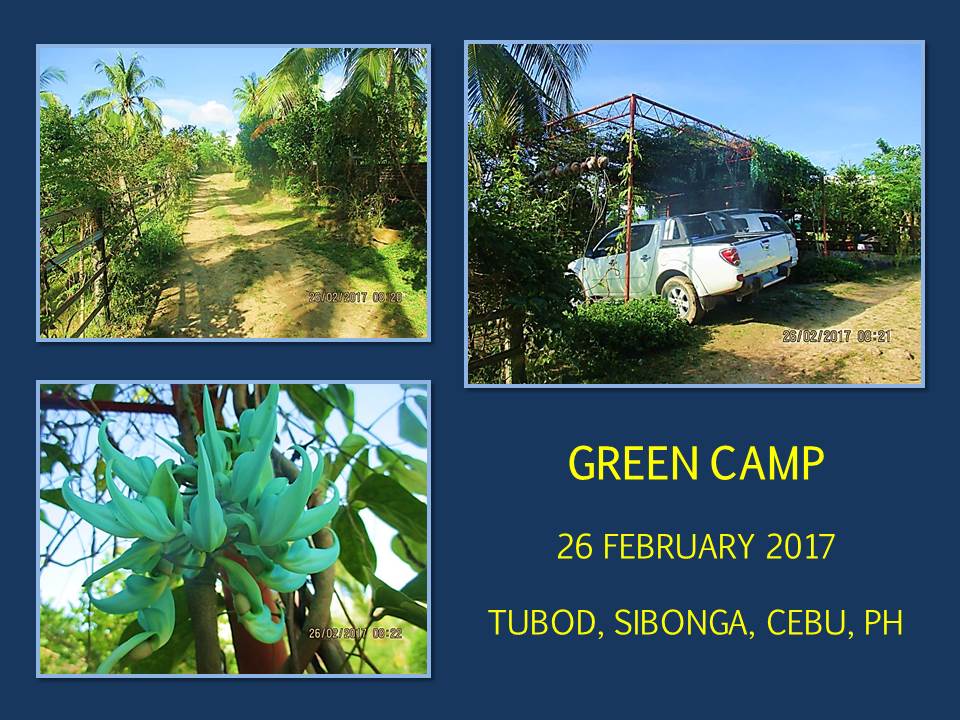
As I went outside to the road, rare jade vine flowers hanged and shaded the two SUVs parking from underneath it. I crossed the road to look over the other side of the farm. There are more spices here, different climbing vegetables, different papayas, different bananas and flowering pittayas. There are roses on the slopes and lemoncitos while cows grazed underneath mango trees. Oh man, I got a case of Plant ID Overload.

I see a chicken coop and it is populated by native variety of fowls like the parawan and the jolo and these look very primeval. On another side are ducks and geese, noisy as ever as they can be. I looked at a small man-made pond with greenish content. On closer inspection, it contains tiny plants. Later, according to Doc Shawn, it contained azolla and duck weed. These are used as feeds to the farm animals and are high in protein.


I went back to the farmhouse but there is a structure that I noticed a while ago which I almost missed on my morning tour. I go down the hill and follow a path. Greeting me are turkeys. Beyond it are the centerpiece of this organic farming business: native sows. This breed is getting rarer and rarer as it is permeable to disease. I am glad that Doc Shawn is preserving its lineage by breeding it here. Each sow nurse six piglets in their separate pens.

It was almost 11:00 when I returned to the lanai. The couple were already there along with their children and guest. Their granddaughter had just completed her harvest of the beans and would be one of the dishes that would be served later. I was sweating as it was now warm but, despite that, cool breeze ensures that you do not overheat.

I changed into a dry t-shirt and hydrate cold water from a ewer. What I saw, I talked about it, to the elation of the Espina couple. Establishing Camp LOV was a project that they have planned for a long time and they decided to push it through in small driblets. First, as a hobby, just to satisfy what they learned in seminars and workshops yet it provided them fresh organic food which excess they sold to their network of friends.

Then they have to expand the size when they realized that the produce provided by the existing farm could not cope up with the growing demand for organic vegetables, fruit, meat and other green goods. It had also allowed their farm neighbors additional income gained by working in Camp LOV or by their own effort on their own plots.

Then there is agriculture tourism and the fad of healthy organic food. Camp LOV has the acreage to make it viable and sustainable, and the water sources to make it a year-round affair. Business opportunities treble when people begin to take notice of your amenities and the services that go with it. To make their ideas harmonize with the tourism blueprint of Sibonga, they had met and sat with the municipal officials on many occasions.


It is just a matter of time when the Espina couple would work on the honest inputs that the visitors have suggested. Lunch time came as expected. Pork bean soup, grilled tuna, tuna in brine, processed organic meat, upland rice and farm-fresh juice. The morning meal had not vacated most of the space inside my intestines as the new batch of warm and delicious food begins to fill in the empty spaces.

I am full and feel bloated. There is nothing to do now but wait for our departure from Camp LOV. There are no more native concoctions but there is an empty lounge chair and the unfinished novel. Drowsiness overcame me and I have to give my eyes their deserved rest. It is a long afternoon and we finally departed at five. Dr. Espina made it sure that I bring a gallon of coconut vinegar for the wife.


Document done in LibreOffice 5.3 Writer