Thursday, March 11, 2021

2021-010 | HYDRATION & WATER SANITATION

OUTDOORS COMMON SENSE TIPS: Never ever trust a stream for your drinking water. If you must, please boil it first.


First seen in Facebook

February 4, 2018

=> => => o0o <= <= <=


THERE WAS ONE SURVIVAL MANUAL that I read many years ago that says: if you ran out of water and you happen to chance upon a stream, choose the middle part where current is strong, for it is good for drinking. What? There must be no schistosomiasis cases in their area but there must be amoebiasis, cryptoporidiosis and giardiasis somewhere. Do not forget salmonella and E. coli too. 

Of course, I would drink it from anywhere when if I was chased by a hundred cannibals. Kidding aside, clean drinking water is very important when you are outdoors; much more so when you are on survival mode. Never let untreated water be the reason why you lived a tormented existence as you find your way in the wilderness to find help. Never do shortcuts when ingesting liquid into your system.


The best thing to do is strain it from debris and boil it. Boiling kills all parasites and bacteria. Boiling temperature is when you see bubbles at the bottom of your cup or pot. It is already 100 ˚C and nothing could survive that. A word of advice: Boiling would never turn brown turpid water into clear spotless water. The best course of action for you is deceive your eyes and drop powdered juice over it. 

Chemicals, overruns from big plantations, industries and farms which found its way to streams, can never be removed by filtration, by chlorine and by boiling. It stays as micro sediments and does not evaporate. The only way to remove it is by evaporation and condensation; or distillation. It stays in the bottom because it is heavier than air during an evaporation process. 

If you really are a poor fellow, because you are unprepared, you do have a cup and a bottle but you have no matches nor lighter, the best thing for you to do is dig a hole beside a stream. By your action, you are making a shallow open well and water filled it up quickly. The water is full of silt but it is clean because it is strained by sand and clay from the main source, which is the stream.


You let the silt settle down. After an hour, you line the sides and bottom of the hole with small stones, gingerly and carefully so you would not disturb the silt. When it is done, fill your cup with water and strain water into the bottle. Despite your best efforts, silt would still be found in your bottle. Again, let it settle at the bottom for an hour and you may start to rehydrate. 

If I have a portable water filter (Lifestraw©, Aqua Mira©, Sawyer©), I could drink directly from a stream. If I do it on a water hole I made, the possibility of the silt clogging the filter is great, hampering its efficiency and its lifetime, so I do not want to sip in water from there. The best choice really is directly upon a stream, parasites or none. 

Another method of sanitizing your water for drinking is by dropping a pinch of chlorine granules. Let the granules dissolve in your water for, at least, 30 minutes to an hour. It has a tangy aftertaste. The more minutes it stayed, the better your water tastes. The same process is applied when you use water purification tablets and drops of betadine.


Do not be a poor unprepared fellow. Carry always with you matches and lighter, a portable water filter, chlorine, betadine and purifying tablets. Hey, these are very light and small items. Do not squirm! Redundancy increases your security. Remember that always.       

=> => => o0o <= <= <=


WARRIOR PILGRIMAGE BLOG, personified by this writer, is synonymous with the Outdoors, since Bushcraft and Survival is its niche. Safety and Security are its bedrock when it ventured into organizing outdoor events that involved people as in adventure/pilgrimage guideships and seminars; and explorations and expeditions. 

Through tutorship, experience, folk knowledge and good old common sense, this writer was able to collect useful information which he is currently documenting in a book titled, ETHICAL BUSHCRAFT. He shares some of this information and knowledge in his training sessions; in his social-media account; and in this blog.


Monday, March 1, 2021

2021-009 | PINOYAPACHE IN A TOURISM PROGRAM

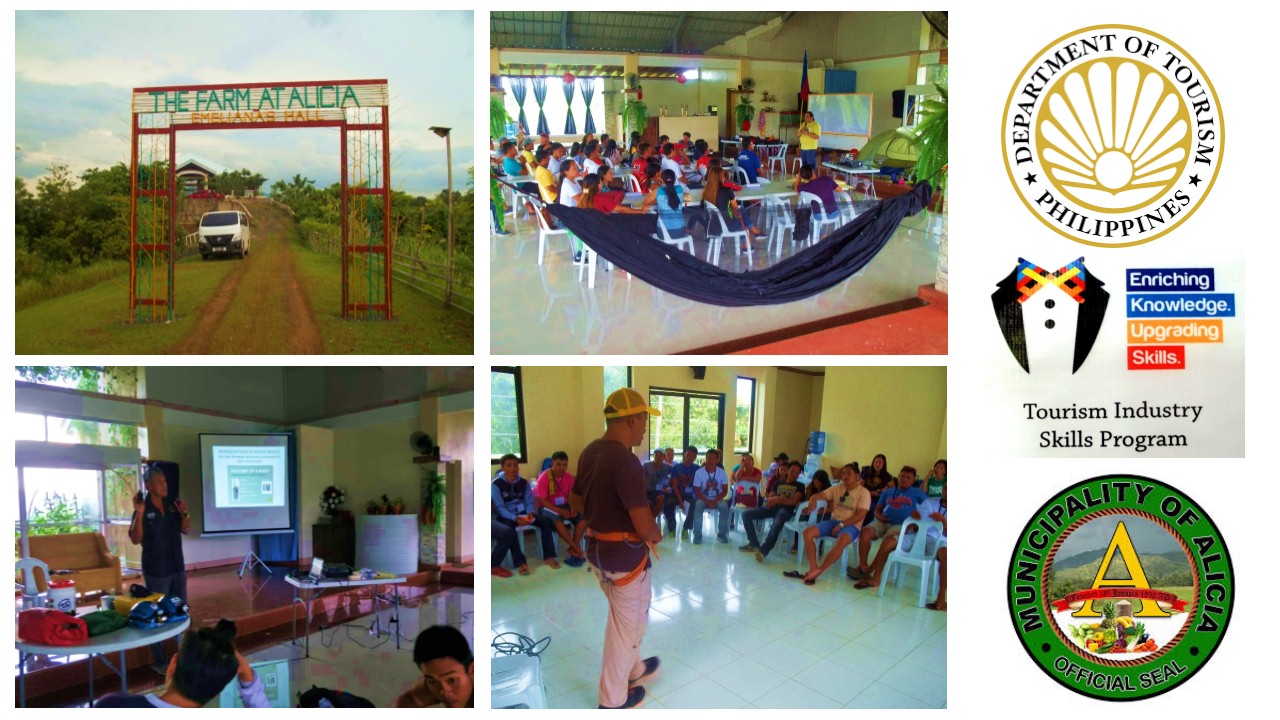
IN 2019, THIS BLOGGER was part of a team of resource persons contracted by the Department of Tourism, Central Visayas Region, to train, educate and enhance community guides of the different local government units (LGU), whose tourism programs are focused on adventure or cultural or both. This national project is called the Tourism Industry Skills Program (TISP) and was implemented by every region since 2017.

DOT-Central Visayas did not fall behind and, in fact, it was running in full steam. Credit that to its Regional Director, Mr. Shahlimar H. Tamano, and the equally hard-working duo of Senior Tourism Operations Officer, Ms. Cynthia O. Monzon, and Tourism Operations Officer, Mr. Eli John Eduave. They were able to assemble a veteran team composed of tourism service specialists and outdoor educators and they were Ms. Agnes Tuling, Mr. Ruel Rigor, Ms. Rosebelle Daculan, Mr. Ramon Vidal, Mr. Randy Salazar and mister yours truly. 

Many aspiring community guides participated in the TISP. Those who passed the series of tests and evaluation given by DOT-Central Visayas are issued special tourism guide license, which scope are confined to the LGU where they belonged or recognized thereat as a community guide. The license gives the holder legitimacy to undertake work of a community guide and, therefore, protects the tourists and their LGU from fly-by-night opportunists. 

The following are the LGUs that have benefited from the TISP offered by DOT-Central Visayas. Each has its own existing tourism programs based on its identity which had already been carved from or associated with the landscape and the landmarks and these had made each LGU unique and worth a visit. This writer would add his personal observations, in italics, as you sift through each LGU on the visit of Team TISP. 

MUNICIPALITY OF BADIAN

Province of Cebu

August 17-24, 2019 

ATTRACTIONS: Kawasan Waterfalls; Matutinao River; Lambug Beach; Badian Island; Osmeña Peak; Candung-aw Peak and Tañon Strait. 

ACTIVITIES: Canyoneering/River Trekking; Swimming/Bathing; Picnic; Snorkeling; Hiking/Camping; Zipline Gliding.

TISP was held at Eskapo Verde, an eco-tourism resort located on an islet off Bugas, Badian. The area is conducive for learning since it is accessible through a 250-meter long bamboo walkway over an estuary where mangroves grow, far away from the Cebu Southwest Road. Accommodation for the DOT-Central Visayas TISP Team was also in Eskapo Verde. 5 stars out of 5.  

Eskapo Verde is a perfect magnet to develop and to include water sports, like kayaking and stand-up paddling (SUP), into the tourism map of Badian LGU. Besides, the five small islets and a half-buried shipwreck all in close proximity to Eskapo Verde is also another venue to develop a new tourism activity of mangrove kayaking. 

What a lot of people in Badian do not know is that the longest Camino de Santiago in the Philippines starts from their own St. James the Apostle Parish, located in Poblacion. This is a pilgrimage route that climb over the mountains to Dalaguete and goes north to Compostela, 175 kilometers away. This is patterned after the one in Spain and have been established here in Cebu since July 2017. It passes by the barangays of Dagatan, Malhiao, Sohoton, Tigbao and Santicon.   

CITY OF CARCAR

Province of Cebu

August 27-September 1, 2019 

ATTRACTIONS: Preserved Spanish Colonial Infrastructures; Carcar City Museum; Indigenous Food/Delicacies; Guadalupe Mainit-Mabugnaw National Park; and Theotokos Shrine. 

ACTIVITIES: Cultural/Historical Tour; Gastronomic Tour; Spelunking/Cave Tour; Hiking/Camping; Sightseeing/Birdwatching; Warm Water Bathing.

TISP was held in a vacant room of the new Carcar City Hall. The seminar is partly shouldered by the Department of Environment and Natural Resources, Region VII, because of the inclusion of the GMMNP in the city’s tourist mapping. Accommodation for the DOT-Central Visayas TISP Team was at Tatope Travel Lodge, located along the Cebu South Road, Carcar City. 1 star out of 5. 

Most people in Carcar City do not know yet that both the 400-kilometer Cebu Highlands Trail and the 175-kilometer Camino de Santiago pass by their city. The two long trails both enter Barangay Napo on the same way and exits from Barangay Calidngan at two different paths. 

On the other hand, Carcar City still has remnants of the industries that it had once depended on in the past. Instead of placing them in the dustbin of existence, why not include these into their tourist map. I am talking about leathercraft and bladesmithing. Why not fuse these two and develop a new tourism destination under “blade tourism”? 

MUNICIPALITY OF SAMBOAN

Province of Cebu

September 8-15, 2019

ATTRACTIONS: Aguinid Waterfalls; Binalayan Waterfall; Dao Waterfall; Preserved Spanish Colonial Infrastructures and Tañon Strait. 

ACTIVITIES: River Trekking; Swimming/Bathing; Snorkeling. Picnic; Cultural/Historical Tour; Sightseeing/Birdwatching.

TISP was held inside the session room of the Samboan Municipal Hall. Accommodation for the DOT-Central Visayas TISP Team was at Chelan Resort House, located along the Cebu Southwest Road, Poblacion, Samboan. 3 stars out of 5. 

The Cebu Highlands Trail established a campsite on a ridge of Barangay Monteverde. It would be best if the Samboan LGU would develop it into a camping area because of its proximity to a water tank. 

MUNICIPALITY OF SAN FRANCISCO

Province of Cebu

September 22-29, 2019 

ATTRACTIONS: Lake Danao; Paraiso Cave; Amazing Island Cave and Beach Resort; Timubo Cave; Santiago Bay; San Francisco Baywalk and Causeway; Indigenous Handicrafts. 

ACTIVITIES: Hiking/Camping; Zipline Gliding; Kayaking/Paddling; Picnic; Spelunking/Cave Tour; Swimming/Bathing; Sightseeing/Birdwatching.


TISP was held inside the function room of the San Francisco Multi-Purpose Cooperative, Poblacion, San Francisco. Accommodation for the DOT-Central Visayas TISP Team was at Dayon Lodge, also in Poblacion. 1 star out of 5.

MUNICIPALITY OF TUDELA

Province of Cebu

September 30-October 6, 2019 

ATTRACTIONS: Bukilat Cave; Buenavista Heritage Tree; Villahermosa Giant Clam Sanctuary; Tudela Mangrove Forest; Busay Waterfall; Makalabad Peak. 

ACTIVITIES: Spelunking/Cave Tour; Cultural/Historical Tour; Sightseeing/Birdwatching; Swimming/Bathing; Snorkeling; River Trekking; Hiking/Camping; Kayaking/Paddling.


TISP was held in the function hall of Villa Alicia Resort, Poblacion, Tudela. Accommodation for the DOT-Central Visayas TISP Team was also at Villa Alicia Resort. 3 stars out of 5. 

All blacksmiths in Tudela LGU still used improvised oven and blower and still produce the best blade tools that are used by farmers and homesteads on the islands of Poro, Pacijan and Ponson. It may be worth the effort to include these blacksmith shops into the tourist map of the LGU under the new destination of “blade tour”. It may be even viable if the three other LGU of the Camotes Group of Islands decides to join hands and save this dying industry. 

MUNICIPALITY OF ALICIA

Province of Bohol

October 9-16, 2019 

ATTRACTIONS: Alicia Panoramic View; Birhen Nature Resort; Cagong-cagong Cave; Princess Manan-aw Cave; Chocolate Cave; Alicia Schist Rock. 

ACTIVITIES: Hiking/Camping; Trail Running; Bathing; Sightseeing/Birdwatching; Spelunking/Cave Tour; Cultural/Historical Tour.

TISP was held, respectively; for the first three days, at The Farm in Alicia, Cambaol, Alicia; and for the rest of the week, in the function room of the Alicia Municipal Hall Annex. Accommodation for the DOT-Central Visayas TISP Team was also at the Alicia Municipal Hall Annex. 1 out of 5. 

=> => o0o <= <=


WHILE TOURISM MAY BRING in revenues needed by the LGUs, it has its downside as well. We have seen the decay that over-commercialization and over-development have done on so many places and are now shunned by most tour operators due to lesser tourists. The TISP is just not improving skills on the tourism operators but also considers the health of the environment of a destination as an integral part of development and the team emphasized that in our 2019 LGU tour.